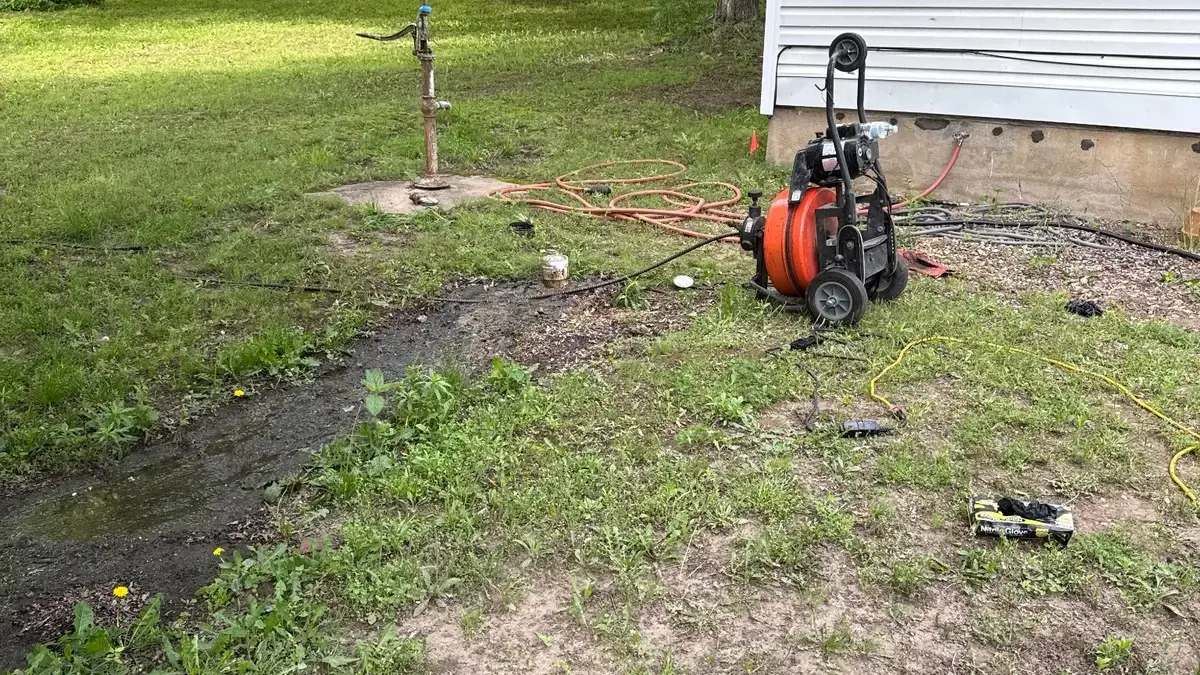
What Can Main Sewer Line Cleaning Fix—and What Can’t It Fix?
Main sewer cleaning can restore flow when roots, grease, sludge, wipes or debris restrict an accessible line. But cleaning is not a structural repair. It cannot reconnect a separated joint, rebuild collapsed pipe or correct a sewer route that no longer drains properly.
Understanding that difference helps Wichita-area homeowners make sense of what happens after a backup. Some calls end with the obstruction removed and the line flowing. A recurring or physically limited line may need camera inspection, locating or repair evaluation before the next step is clear.
Quick answer
Sewer cleaning removes or reduces qualifying obstructions; it does not repair damaged pipe. Cable equipment, cutting heads or hydro jetting may be selected according to the blockage, access and pipe condition. If the backup returns, equipment cannot pass or damage is suspected, a separate camera inspection may be the next useful step.
Is the Restriction in a Drain or the Main Sewer?
The number and location of affected fixtures help determine where to begin. They do not prove the cause by themselves, but they help route the call to the appropriate service.
One fixture or one nearby branch
An isolated sink, tub, shower, toilet, laundry drain or floor drain often points to a fixture or branch-line problem.
Fixture and branch drain cleaningSeveral fixtures or the lowest drain
Multiple drains backing up together, toilets gurgling or wastewater rising through a lower-level drain can point to a main-sewer restriction.
Main sewer line cleaningWhat Main Sewer Cleaning Can Address
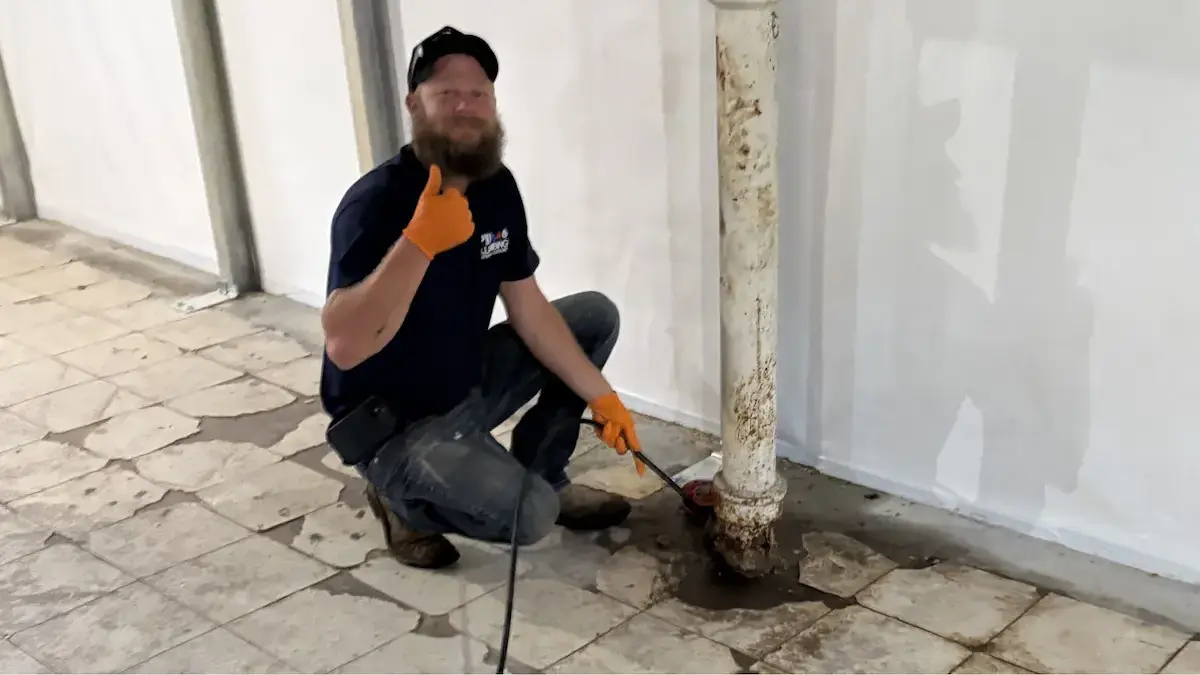
The technician considers the symptoms, available cleanout, blockage history and how the equipment responds. The objective is to clear the accessible restriction and test whether wastewater is moving through the line.
Cleaning can provide useful evidence, too. Material removed from the sewer, resistance encountered by the equipment and the line’s response afterward can help determine whether further inspection is appropriate.
Tree roots
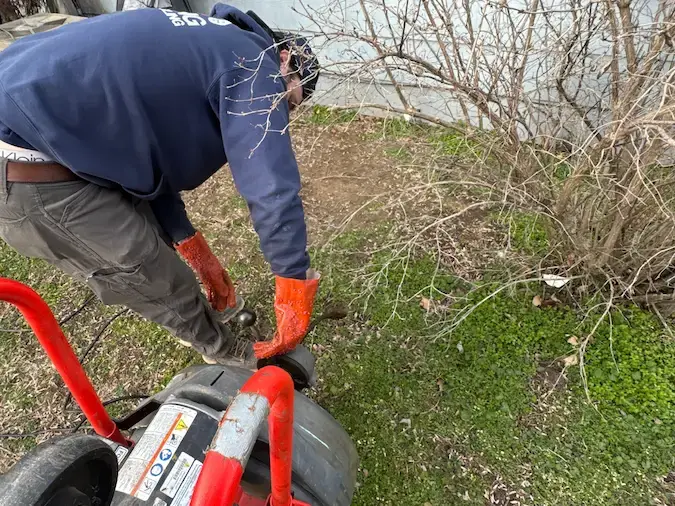
Cable equipment and appropriate cutting heads may remove or reduce qualifying root intrusion so wastewater can move through the line again.
Grease, sludge and buildup
Cable cleaning or hydro jetting may be considered for material coating or restricting an accessible sewer, depending on the pipe and access.
Wipes, paper and debris
Mechanical cleaning may break through or retrieve qualifying obstructions that have collected in the main sewer.
A restricted camera path
Clearing an obstruction can sometimes create the access and visibility needed for a more useful camera inspection.
How Cable Cleaning and Hydro Jetting Differ
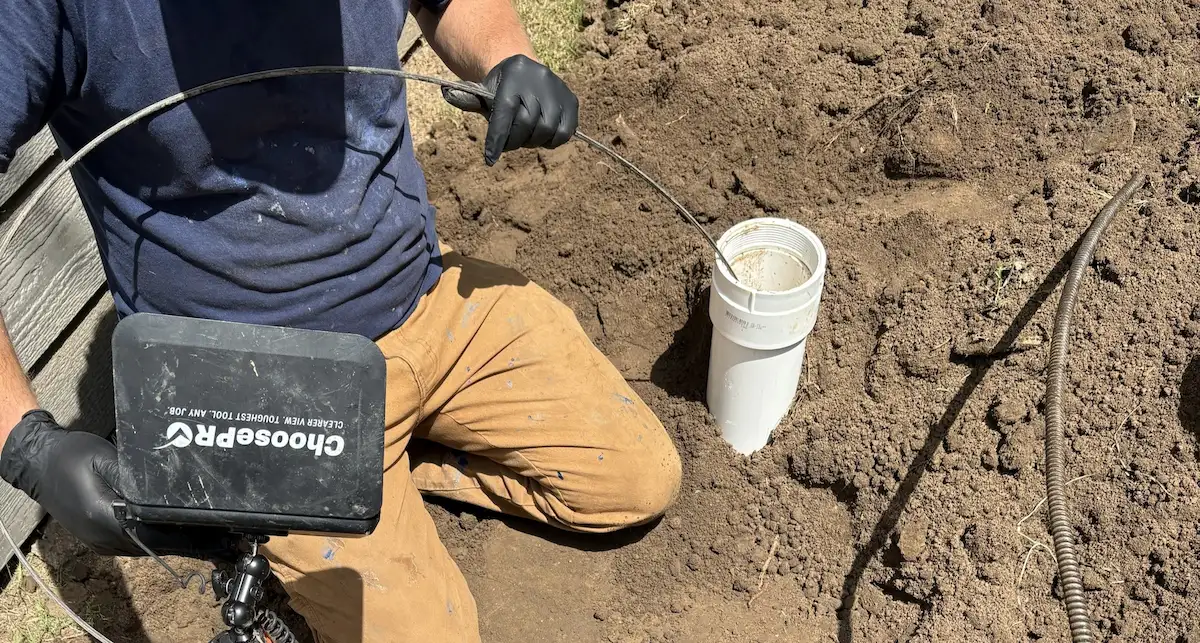
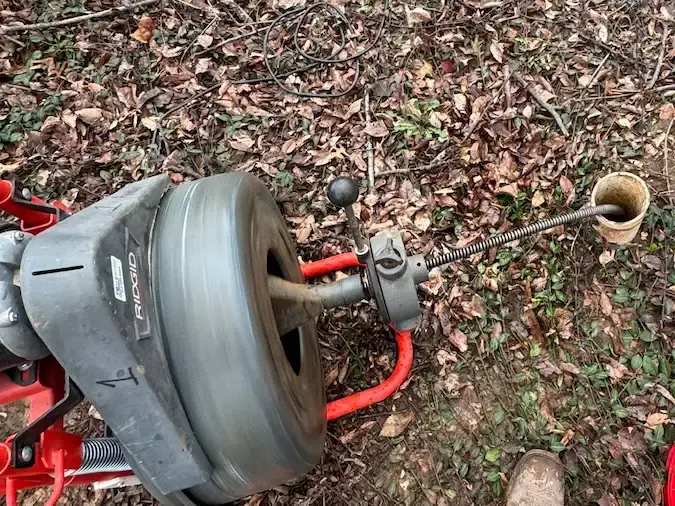
Cable machines rotate a flexible cable and an appropriate head through the accessible sewer. Different heads may be used to break through roots or other physical obstructions.
Hydro jetting uses high-pressure water to remove grease, sludge and buildup on qualifying lines. PD equipment is rated up to 3,800 PSI depending on the machine and application, but maximum pressure is not automatically appropriate for every sewer.
Neither method is universally better. The technician selects equipment according to the pipe, access, obstruction and purpose of the cleaning.
What Sewer Cleaning Cannot Repair
Restoring flow and repairing the sewer are different jobs. Even successful cleaning does not prove that every accessible pipe section is structurally sound.
- Reconnect a separated joint or failed transition
- Rebuild cracked, broken or collapsed pipe
- Correct a long belly, poor grade or unusable route
- Replace missing pipe or repair utility-boring damage
- Guarantee that roots or another obstruction will never return
- Confirm every pipe condition when the camera cannot reach or see it
Why a Cleared Sewer Can Back Up Again
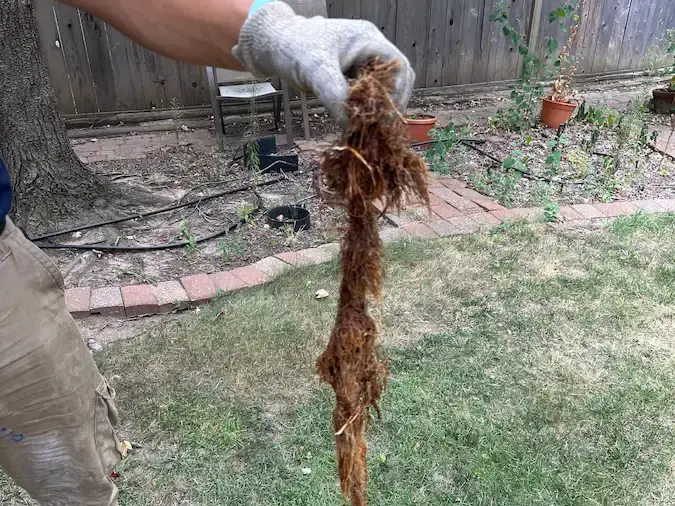
Roots can be cut from the line, but cleaning does not close the joint, crack or opening where they entered. Grease, wipes and debris can also collect again when disposal habits or an underlying pipe condition remain unchanged.
Recurrence does not automatically mean the entire sewer needs replacement. It does mean the timing, removed material, equipment travel and surrounding pipe deserve a closer look before repeating the same step indefinitely.
The backup returns soon after cleaning
The obstruction may not have been fully removed, or a pipe condition may be allowing material to collect again.
Cleaning equipment cannot pass
A heavy obstruction, sharp transition, offset, collapse or another physical limitation may be blocking the route.
Roots repeatedly enter the line
Cleaning can remove roots, but recurring growth may justify inspecting where they are entering and the surrounding pipe condition.
Flow improves but does not remain dependable
The line may need a clearer camera view, locating or additional evaluation before the next recommendation is made.
Why Camera Inspection May Come After Cleaning
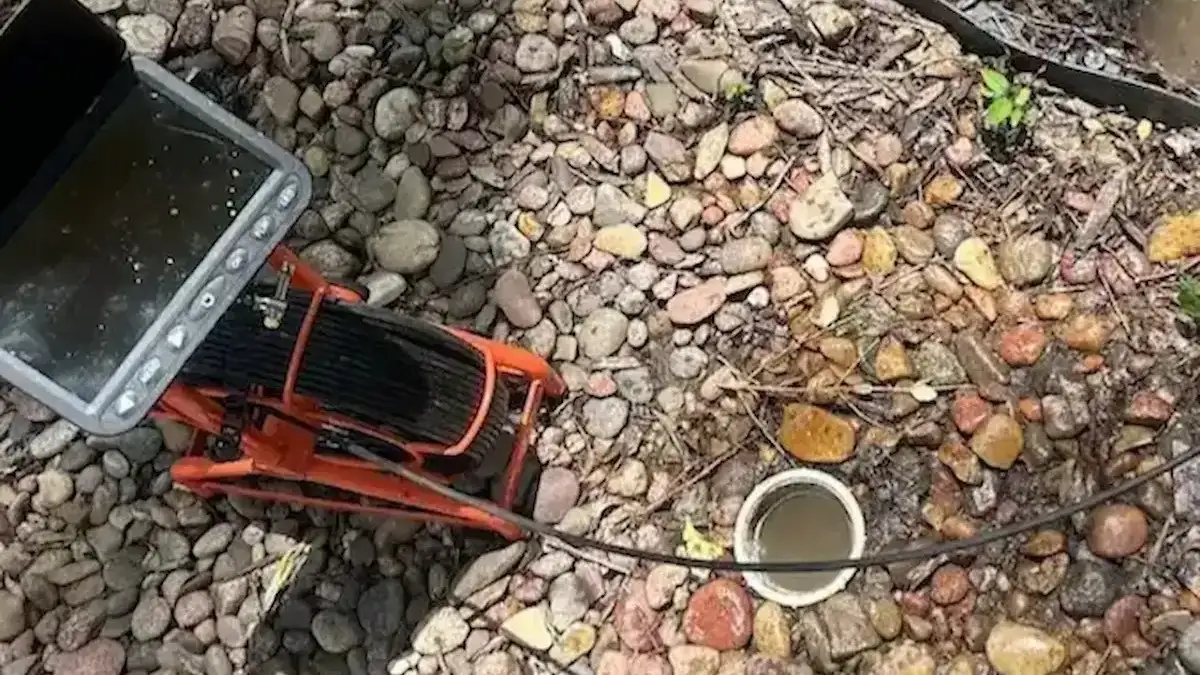
A camera only shows the accessible pipe the lens can reach and clearly view. Standing water, heavy buildup, roots or a blockage can hide the pipe wall or stop the camera.
Clearing the line first can create a more useful camera path. A separate scope may then help document visible conditions, locate an area of concern and determine whether monitoring, localized repair or replacement evaluation makes sense.
Camera inspection is not automatically included with every cleaning. Its need depends on recurrence, equipment travel, suspected damage and the decision the homeowner is trying to make.
Use Recurrence—not an Invented Calendar
There is no responsible one-size-fits-all rule that every home needs sewer cleaning or camera inspection every year. A useful plan is based on symptoms, blockage history, known roots or buildup, pipe condition and prior findings.
- Flush human waste and toilet paper—not wipes, paper towels or hygiene products.
- Keep cooking grease, oil and food debris out of household drains.
- Record when backups occur and which fixtures are affected.
- Keep known sewer cleanouts visible and accessible for service.
What Happens After the Sewer Is Cleaned?
What happens next depends on how the line responds to cleaning and what the technician finds. Some situations only call for monitoring, while recurring symptoms or suspected damage may justify camera inspection or repair evaluation.
Restore flow and monitor
If the obstruction is removed and flow remains dependable, the homeowner may only need to watch for returning symptoms.
Inspect the accessible sewer
Recurring problems, roots, limited equipment travel or suspected damage may justify a separate camera inspection and locating service.
Sewer camera inspectionEvaluate repair options
Visible structural damage, repeated failures or grade and route problems may lead to localized repair or replacement planning.
Repair-versus-replacement guideFrequently Asked Questions
How can I tell a fixture clog from a main sewer blockage?
One isolated sink, tub, shower or toilet often points to that fixture or branch drain. Several fixtures backing up together, toilet gurgling or wastewater rising through a lower-level drain can point to a restriction in the main sewer. The symptoms still need to be evaluated at the property.
Can sewer cleaning remove tree roots?
Professional cable equipment and appropriate cutting heads can remove or reduce qualifying root intrusion. Cleaning restores flow when possible, but it does not repair the opening or damaged joint that allowed roots to enter. Recurring roots may justify camera inspection.
Does cleaning fix a broken or collapsed sewer line?
No. Cleaning removes or reduces an obstruction. It cannot reconnect separated pipe, rebuild a broken section, correct a long grade problem or restore a collapsed route. Those conditions require repair or replacement evaluation.
Is hydro jetting always better than cable cleaning?
No. Cable equipment, cutting heads and hydro jetting address different conditions. Hydro jetting may help with grease, sludge and buildup on qualifying lines, while cable equipment may be appropriate for roots and physical obstructions. Pipe condition, access and the material in the line determine the method.
Is a sewer camera inspection included after every cleaning?
No. Camera inspection may be recommended when backups recur, roots or damage are suspected, equipment cannot pass or a clearer view is needed for repair planning. It should not be assumed to be included with every cleaning service.
How often should a main sewer line be cleaned?
There is no dependable universal schedule for every property. Cleaning should be based on symptoms, blockage history, known root or buildup problems, pipe condition and the technician’s findings rather than an invented annual interval.
Start with the obstruction
Need Help With a Main Sewer Backup?
PD Plumbing clears roots, debris and qualifying main-line buildup, tests flow and explains when recurring symptoms may justify a separate camera inspection or repair evaluation.
Keep Reading
More Sewer Line Guides
Keep reading helpful guides from PD Plumbing Heating & Cooling.