Does Your Basement Need a Sump Pump? What Homeowners Should Check First
Water in a basement or crawlspace can be stressful, especially after heavy rain. Sometimes the problem is a failed sump pump. Other times, the issue may involve the sump basin, discharge line, window well drain, drain tile or another water source.
Around Wichita, Augusta, Andover, Maize and nearby Kansas communities, sump pump problems often show up when the pump cannot keep up, the float switch sticks, the discharge line sends water back toward the foundation or the home does not have a proper sump pump setup.
Before assuming one part is the problem, it helps to understand how the system is supposed to work and what homeowners should check first.
Quick Answer
A sump pump helps when water is collecting below the basement or crawlspace and needs to be pumped away from the home. If water keeps returning, the problem may also involve drain tile, a window well drain, a check valve, the discharge line or another water source.
How Drain Tile, the Basin, the Pump and Discharge Line Work Together
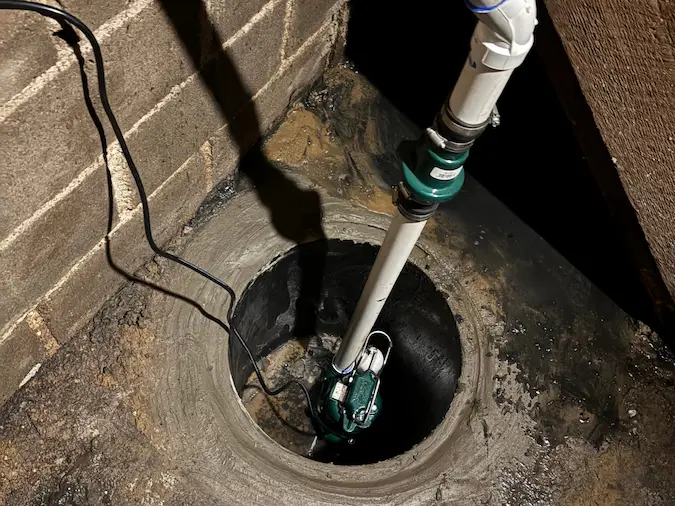
A sump pump is one part of a larger basement water system. For the pump to help, water usually has to reach the basin, the pump has to turn on, and the discharge line has to move water far enough away from the foundation.
Drain Tile Collects Water
Drain tile or foundation drainage helps collect water around or below the foundation and move it toward a sump basin.
The Basin Receives It
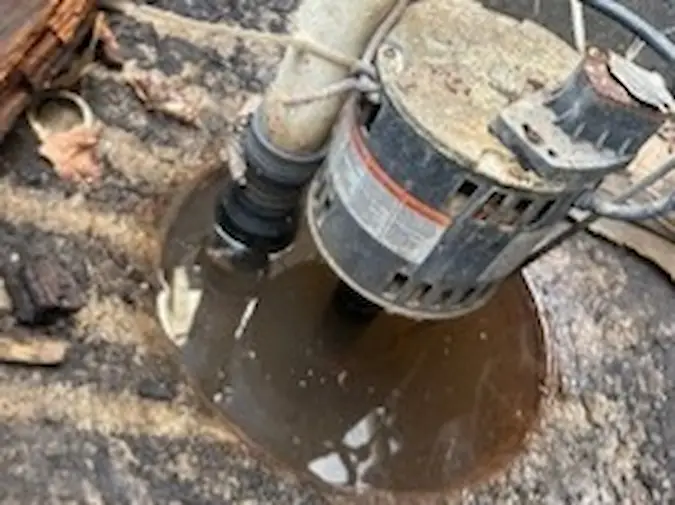
The sump basin is the low collection point where water gathers before the pump turns on.
The Pump Removes It
The sump pump uses a float switch to turn on and move collected water out of the basin.
The Discharge Carries It Away
The discharge line sends water outside. If it is short, clogged or poorly routed, water can end up back near the foundation.
Why Does Basement Water Keep Showing Up?
Basement water is not always caused by one failed part. A sump pump system depends on water reaching the basin, the pump turning on, and the discharge line carrying water away from the foundation.
Heavy Rain & Groundwater
Soil around the foundation can become saturated and push water toward the basement or crawlspace.
Drain Tile Issues
Drain tile may be clogged, damaged, disconnected or unable to move water toward the sump basin.
Pump or Float Problems
A stuck float switch, failed pump, bad check valve or undersized pump can allow water to rise.
Discharge Problems
A short, clogged or poorly routed discharge line can send water back toward the foundation.
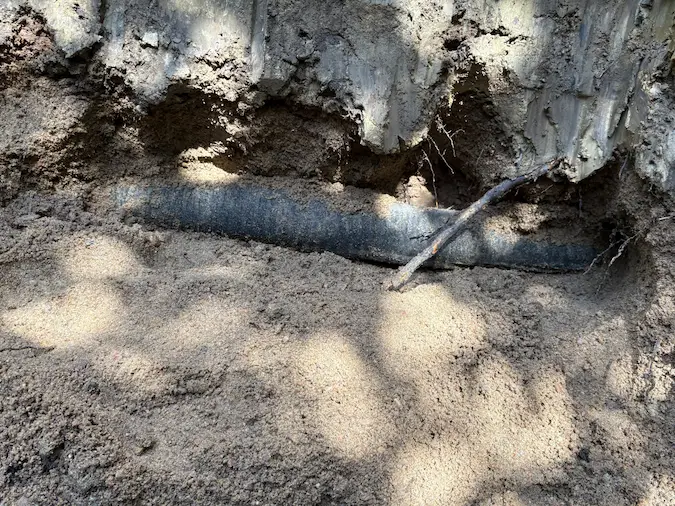
How Drain Tile and Sump Pumps Work Together
Drain tile or foundation drainage helps collect water around or below the foundation and move it toward a sump basin. The sump pump then removes that collected water and sends it outside through a discharge line.
If drain tile is clogged, crushed, leaking or not connected the way it should be, the pump may not solve the whole water problem by itself.
What Can Homeowners Check First?
These simple checks may help you understand what is happening. If the problem continues, comes back or involves standing water, it is best to have the system inspected.
Check Power & Float Switch
Make sure the pump has power and that the float can move freely without catching on the basin wall.
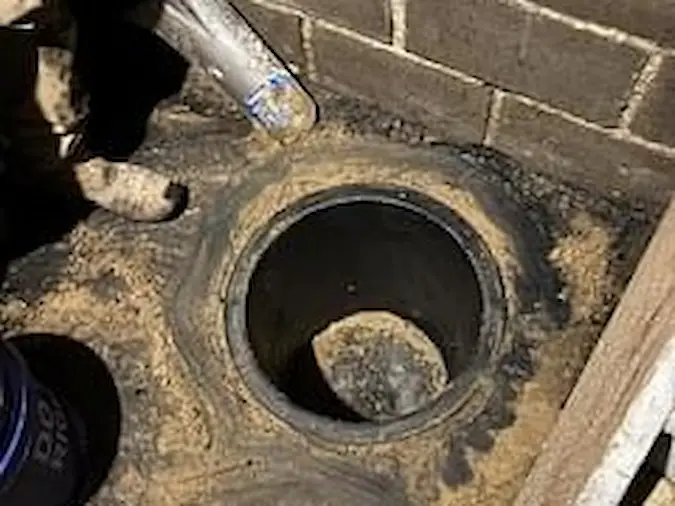
Look at the Basin
If the basin is full and the pump is not running, the pump, switch, outlet or check valve may need attention.
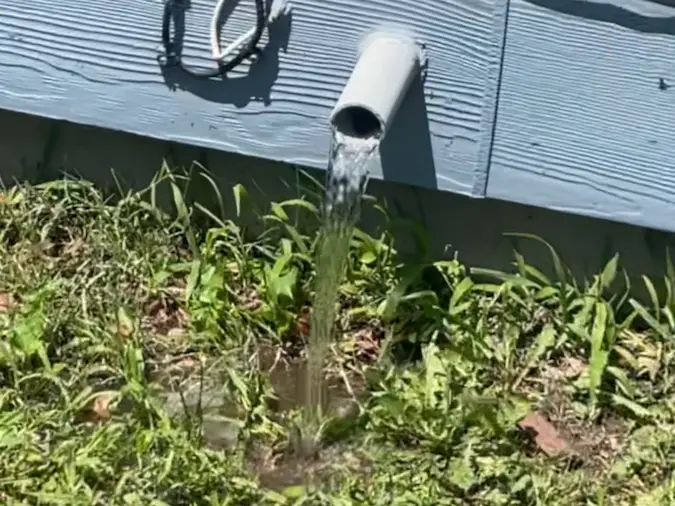
Check the Discharge
Look outside to see whether water is moving away from the home instead of pooling near the foundation.
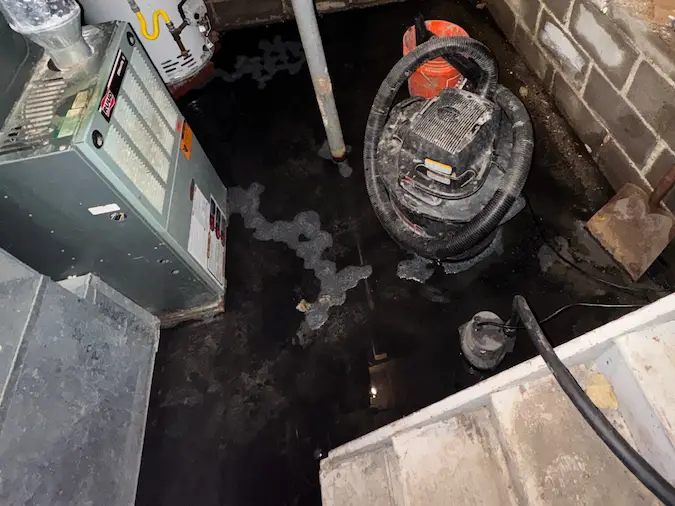
Watch for Returning Water
If water keeps coming back, the issue may involve the drain tile, window well drains or another water source.
What Should You Avoid With a Sump Pump Problem?
Do not ignore a pump that runs constantly, hums without moving water, trips power, or only works sometimes. Those signs can point to a pump, switch, check valve or discharge problem.
Avoid assuming every basement water issue is solved by replacing the pump. If water is coming from a window well, wall, floor drain or plumbing leak, the source needs to be checked.
Do not let the discharge line dump water right beside the foundation. Water that drains too close to the home can return to the same area the sump pump is trying to protect.
Do not wait on standing water
Basement water can damage flooring, walls, stored items and mechanical equipment if it is left alone.
How Do You Know if It Is More Than a Pump Problem?
A failed pump can cause basement water, but it is not the only possibility. If water keeps returning or appears in a specific area, the drainage path should be checked.
- Water comes back soon after the pump runs
- The pump runs constantly during rain
- The basin fills but the pump does not turn on
- Water is pooling around window wells
- The discharge line is short, clogged or draining too close to the home
- Basement water appears even when the sump pump seems to work
How Does Professional Sump Pump Service Work?
Professional sump pump service starts with checking the pump, basin, float switch, check valve and discharge line. If basement water appears to be connected to foundation drainage, accessible drain tile or window well drain lines may also need to be inspected.
Depending on the issue, the right solution may be repair, replacement, a new sump pump installation, discharge line correction, a backup pump discussion or drain tile repair recommendations.
When Should You Call PD Plumbing?
If the pump is not turning on, the basin keeps filling, the discharge line is not moving water away, or water keeps coming back, it is time to call. PD Plumbing helps homeowners with sump pump service in Wichita, Augusta, Andover, El Dorado, Maize and surrounding areas.
Need Professional Sump Pump Help?
If water keeps coming back, PD Plumbing can check the pump, basin, float switch, check valve, discharge line and nearby drainage concerns in Wichita, Augusta and nearby areas.
Schedule ServiceRelated Plumbing Help
Sump Pump Service
For sump pump repair, replacement, installation and discharge line help.
Emergency Plumbing
For urgent basement water, backups or water problems that cannot wait.
Drain Cleaning
For floor drains, slow drains or backups that may point to a drainage issue.
Leak Detection
For checking whether water is coming from a plumbing leak instead of drainage.
Frequently Asked Questions
Does every basement need a sump pump?
Not every basement needs a sump pump, but homes that get water during heavy rain, have a low basement, have drain tile, or sit in an area with poor drainage may benefit from a sump pump system.
How do drain tile and sump pumps work together?
Drain tile or foundation drainage helps move water toward a sump basin. The sump pump then removes that collected water and sends it outside through a discharge line.
What if my home does not have a sump pump?
If basement water keeps appearing, the first step is to identify the source. A sump pump installation may involve opening concrete, setting a basin, installing the pump and check valve, and routing the discharge away from the foundation.
Can PD Plumbing inspect drain tile with a camera?
In some cases, yes. PD Plumbing may be able to inspect accessible drain tile, window well drain lines or related drainage piping to help determine whether the line is clogged, damaged or connected to the sump basin.
When should I call a plumber for basement water?
Call if the pump is not turning on, the basin keeps filling, the discharge line is not moving water away, water keeps returning, or you are not sure whether the issue is a sump pump, drain tile, leak or drain backup.
Keep Reading
More Sump Pump Guides
Keep reading helpful guides from PD Plumbing Heating & Cooling.