Why Your Sump Pump May Not Be Enough During Heavy Rain
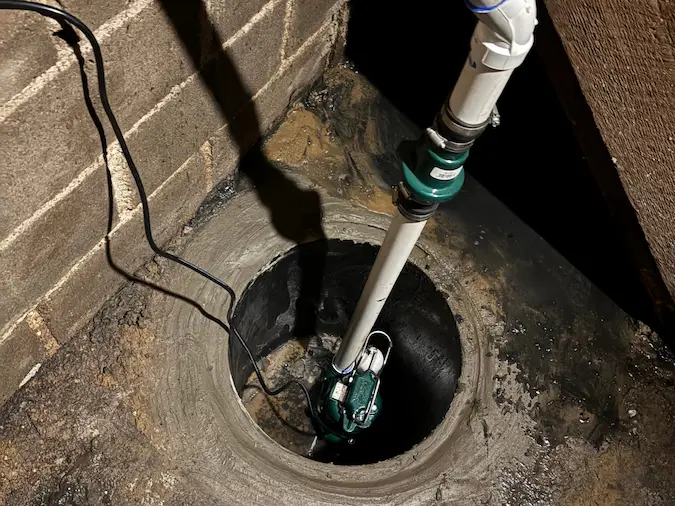
A sump pump can work fine during normal rain and still fall behind during a hard Kansas storm. When water starts entering fast, the pump may run constantly, the basin may keep filling, and small weak points can turn into basement water quickly.
Around Wichita, Augusta, Andover, Maize and nearby communities, heavy rain can expose problems with pump capacity, power, tripped breakers, GFCI outlets, backup systems, check valves and discharge lines.
Before assuming the pump itself is the only problem, it helps to understand why a basement can still flood even with a sump pump and what homeowners should check first.
Quick Answer
A sump pump may not be enough during heavy rain if water enters faster than the pump can remove it, the pump runs constantly, power is lost, a breaker or GFCI trips, the discharge line sends water back, the check valve fails, or the backup system cannot keep up.
Why Heavy Rain Can Overwhelm a Sump Pump System
A sump pump is only one part of the basement water system. During a long or heavy storm, the weak point may be the pump, the power source, the discharge line, the backup setup or the amount of water reaching the basin.
Water Enters Too Fast
During a heavy storm, the basin can fill faster than the pump can remove water, especially if groundwater rises quickly around the foundation.
The Pump Runs Constantly
A pump that runs nonstop may be doing its job, but it may also be undersized, aging, cycling too often or dealing with water returning to the basin.
Power or Breakers Fail
Storms can knock out power, trip breakers or interrupt a GFCI outlet. A standard electric pump cannot help if it loses power.
Water Comes Back
A short, clogged, frozen or poorly routed discharge line can send water back toward the home even after the pump removes it from the pit.
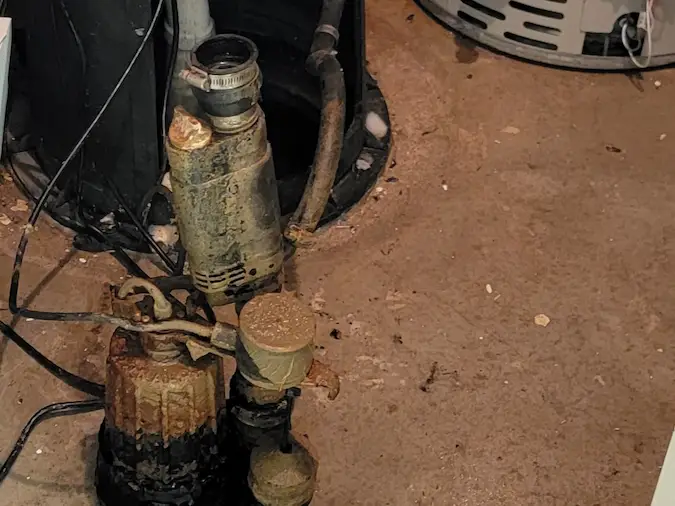
A Pump That Runs Constantly May Still Be Falling Behind
When a pump runs every few minutes or nearly nonstop during rain, it is a sign the system is under pressure. The pump may be removing water, but it may not be removing it fast enough for the amount of water entering the basin.
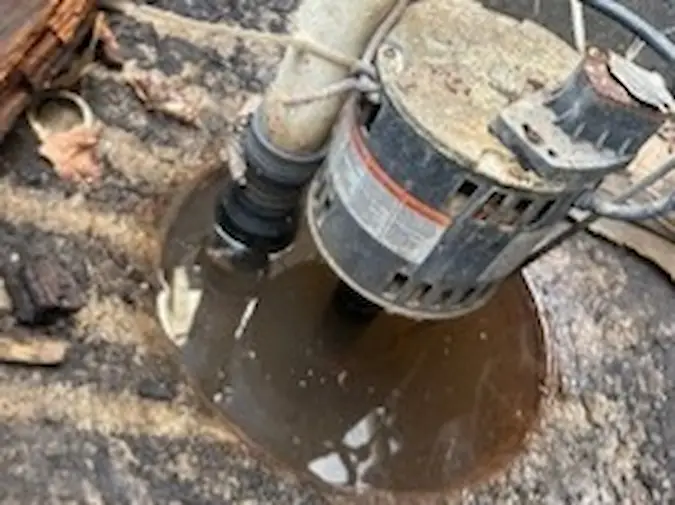
Older pedestal pumps, weak pumps, stuck floats, debris in the basin and worn check valves can all make heavy-rain situations worse. The problem may not show up until the first big storm.
Power Outages, Tripped Breakers and Backup Limits Matter
Storms are exactly when sump pumps are needed most, but they are also when power problems are more likely. A standard electric pump cannot move water if the power goes out, a breaker trips, or the outlet loses power.
Battery Backups Need Capacity
A battery backup can help during an outage, but batteries have limits. Long storms, frequent cycling and age can reduce how long backup protection lasts.
Water-Powered Backups Have Requirements
A water-powered backup can run without electricity, but the home needs the right water supply, shutoff, piping and protection setup.
Backups Do Not Fix Bad Discharge
A backup pump still needs a clear discharge path. If the line is blocked or dumps too close to the foundation, water can keep coming back.
The Main Pump Still Matters
An old pedestal pump, weak pump, stuck float or worn check valve can turn a manageable storm into a basement water problem.
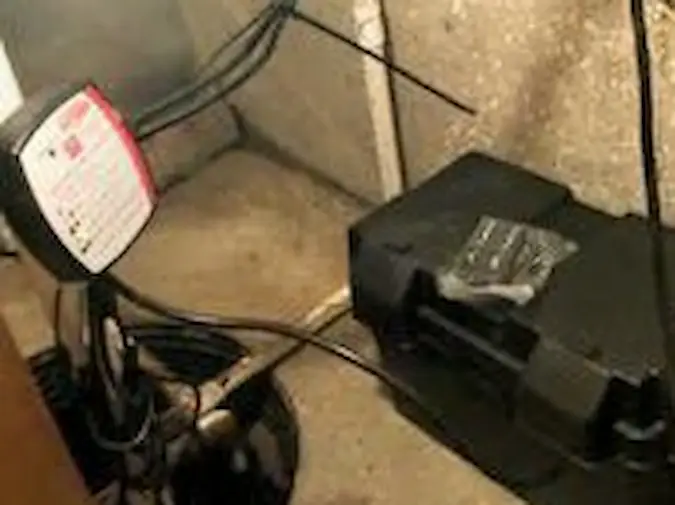
Even a Battery Backup Has Limits
A battery backup can be a major help when power is out, but it is not unlimited. Battery age, charge level, pump run time and how much water is entering the basin all affect how long backup protection can last.
If a pump is cycling constantly during a long storm, the backup may have to work much harder than it would during a short outage.
When a Water-Powered Backup May Be Worth Discussing
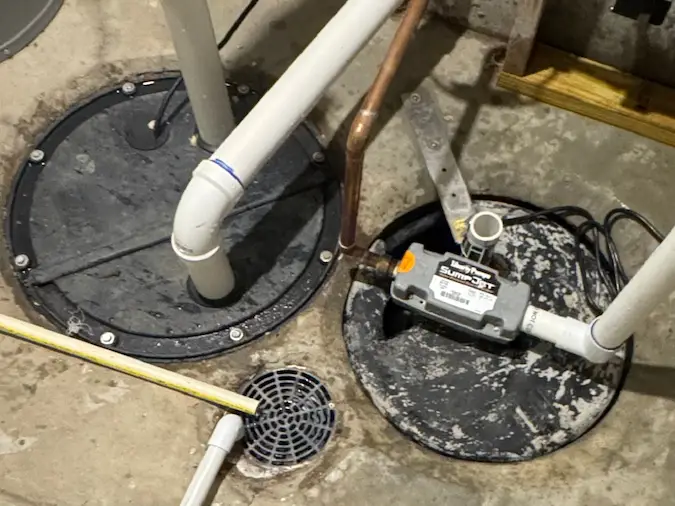
Some homes use a water-powered backup sump pump because it can operate without electricity. That can be helpful during storm-related power loss, but the home needs the right water supply, shutoff, piping, check valve and backflow protection setup.
The point is not that every home needs the same backup. The point is that backup protection should match the home, storm risk and how quickly water reaches the basin.
What Can Homeowners Check First?
These checks can help you narrow down whether the issue looks like pump capacity, power, discharge routing, backup limits or water returning to the foundation.
Listen for Constant Running
If the pump runs nearly nonstop during rain, the system may be overwhelmed or water may be returning to the basin.
Check Power and Breakers
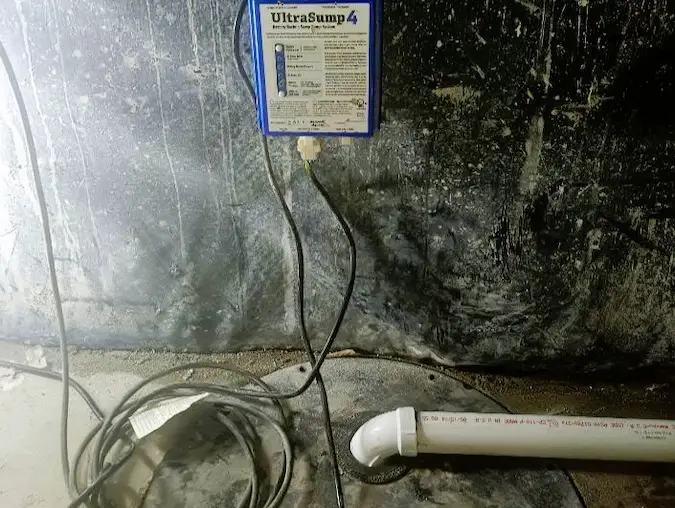
Make sure the pump has power and that the outlet, breaker or GFCI has not tripped during the storm.
Watch the Discharge
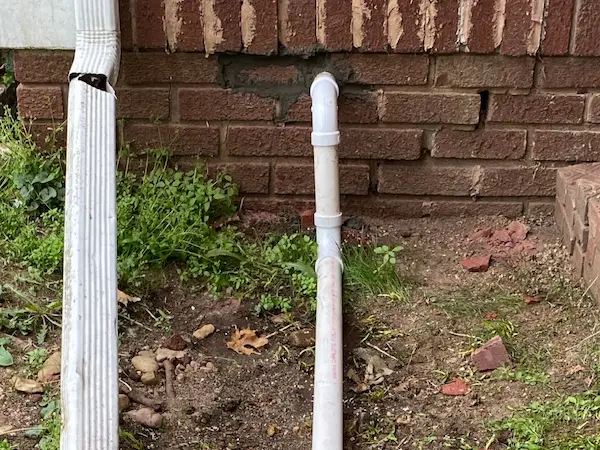
Water should move away from the home. If it exits too close, it can soak back toward the foundation and refill the pit.
Look for an Old or Weak Pump
A failed pedestal pump, stuck float or worn pump may not move water quickly enough when a heavy storm hits.
Discharge and Check Valve Problems Can Send Water Back
The discharge line is where the water goes after the pump moves it out of the basin. If that line is short, restricted, frozen, poorly connected or aimed toward the house, water can return to the same area.
A check valve problem can also make the pump cycle more than it should. Instead of water staying out of the basin, some of it can fall back after the pump shuts off.
When that happens, homeowners may think the pump itself is bad even though the larger issue is where the water is going after it leaves the basin.
Do not overlook the discharge
A pump can only help if the water is carried away from the home and does not flow back toward the foundation.
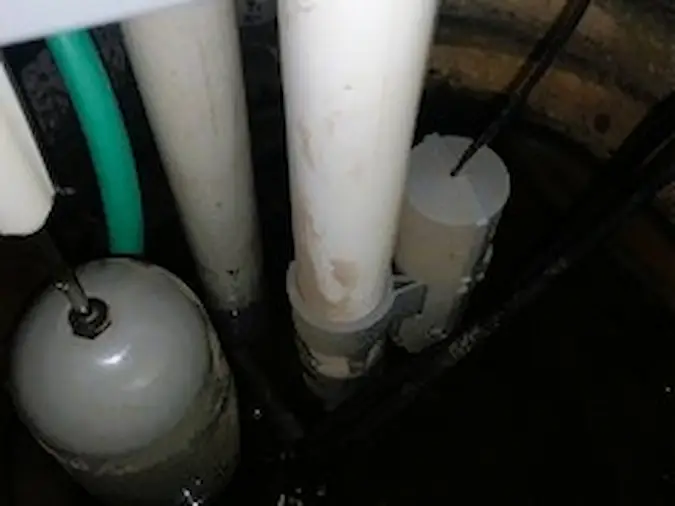
How Do You Know It Is More Than the Pump?
If a pump is running but water keeps showing up, the next step is to look at the rest of the system. The issue may involve the breaker, outlet, float switch, check valve, discharge line, drain tile, grading or another water source.
- The pump runs constantly when it rains
- The basin fills faster than the pump can empty it
- The breaker or GFCI outlet trips during storms
- The pump hums but does not move water
- Water returns soon after the pump shuts off
- The discharge line is short, clogged, frozen or aimed toward the foundation
- The backup system does not run long enough or does not turn on
- Basement water appears even though the pump seems to be working
What Might a Plumber Check After a Heavy Rain Problem?
A sump pump visit after heavy rain may include checking the pump, basin, float switch, check valve, outlet, breaker, backup setup and discharge line. If water keeps returning, nearby drainage, grading, drain tile or window well drains may also need attention.
The goal is to identify the weak point instead of assuming that replacing one part will solve the whole basement water problem.
When Should You Call PD Plumbing?
If the pump runs constantly, the basin keeps filling, the breaker trips, the backup does not turn on, the discharge line is not moving water away, or water keeps coming back, it is time to have the system checked. PD Plumbing helps homeowners with sump pump concerns in Wichita, Augusta, Andover, El Dorado, Maize and surrounding areas.
Need Sump Pump Help After Heavy Rain?
PD Plumbing can check the pump, basin, float switch, check valve, power source, backup setup and discharge line, then explain what may be causing water to return.
Schedule ServiceRelated Plumbing Help
Sump Pump Service
For sump pump repair, replacement, backup and discharge line help.
Emergency Plumbing
For urgent basement water, backups or water problems that cannot wait.
Drain Cleaning
For floor drains, slow drains or backups that may point to a drainage issue.
Leak Detection
For checking whether water is coming from a plumbing leak instead of drainage.
Frequently Asked Questions
Can a basement flood even if the sump pump is working?
Yes. A sump pump can turn on and still fall behind if water enters too quickly, the power is interrupted, a breaker trips, the discharge line has a problem, or the backup system cannot keep up.
What does it mean if my sump pump runs constantly during rain?
Constant running can mean the pump is handling a large amount of water, but it can also point to an undersized pump, old pump, stuck float, bad check valve, poor discharge routing or water returning to the basin.
Can a tripped breaker stop a sump pump?
Yes. If the pump loses power because of an outage, tripped breaker or GFCI issue, a standard electric sump pump will not move water until power is restored or backup protection takes over.
Is a battery backup enough during heavy rain?
A battery backup can help during an outage, but it has limits. Battery age, storm length, pump cycling and the amount of incoming water all affect how long it can protect the basement.
When should I call a plumber for sump pump problems after rain?
Call when the pump runs constantly, the basin keeps filling, the pump will not turn on, the breaker trips, the discharge line is not moving water away, or basement water keeps coming back.
Keep Reading
More Sump Pump Guides
Keep reading helpful guides from PD Plumbing Heating & Cooling.