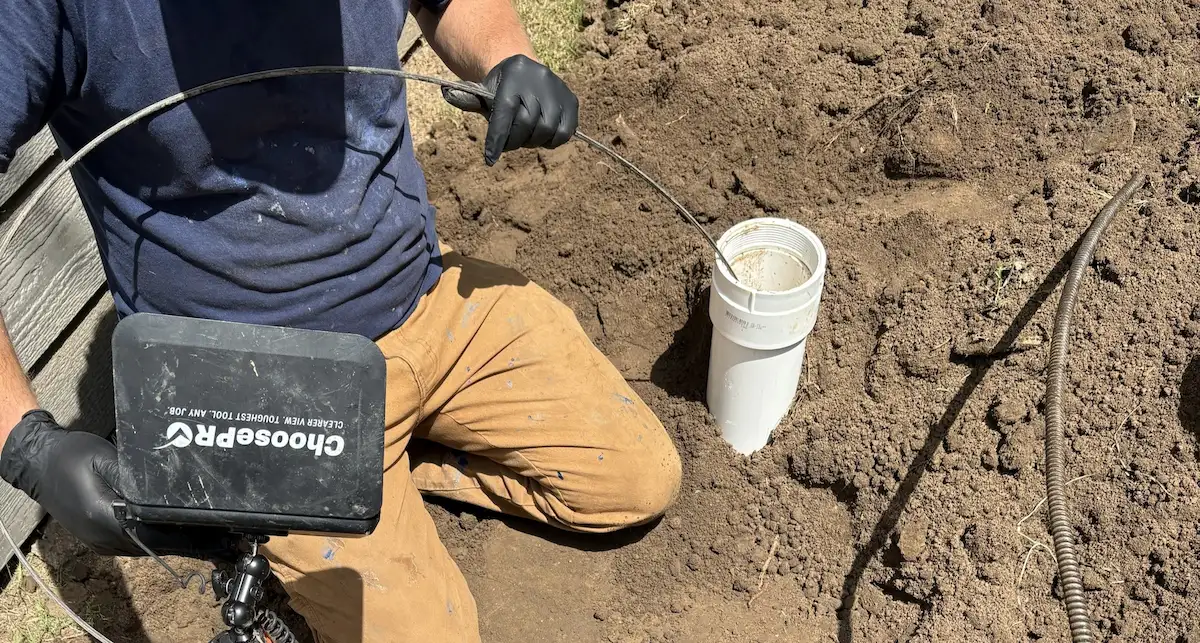
Sewer Line Repair vs. Replacement: What Determines the Right Fix?
A sewer backup does not automatically mean the entire line needs to be replaced. Some lines only need the obstruction cleared. Some have one damaged section that can be exposed and repaired. Others have several failures, poor grade or widespread damage that make replacement the more dependable option.
The right recommendation should come from evidence: how the line responds to cleaning, what the camera can see, where the problem is located, the condition of the surrounding pipe and what must be disturbed to reach it.
Quick answer
An isolated defect with serviceable pipe on both sides may be a good candidate for a spot repair. Multiple breaks, widespread deterioration, collapse, poor grade or repeated failures can make full replacement more practical. A sewer camera and locator help define the problem, but access, connections, utilities and surface restoration also affect the final plan.
First, Separate a Blockage From a Broken Pipe
Cleaning, repair and replacement address different sewer problems. The right approach depends on the condition of the line and the least invasive method that can provide a dependable result.
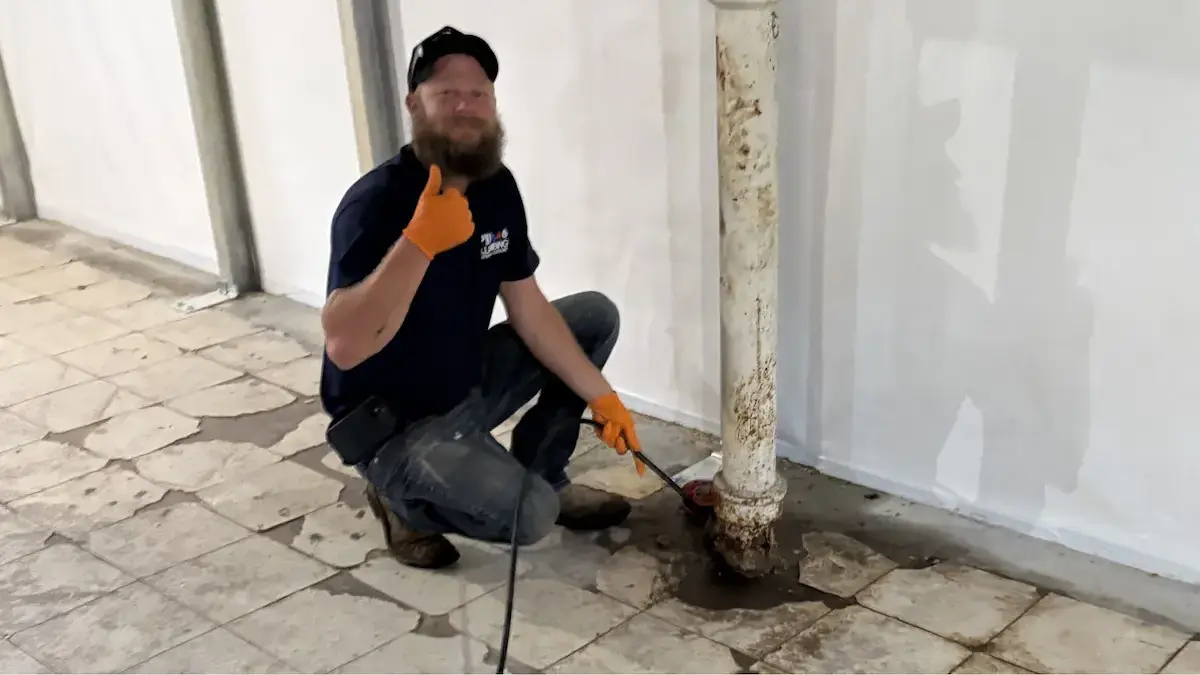
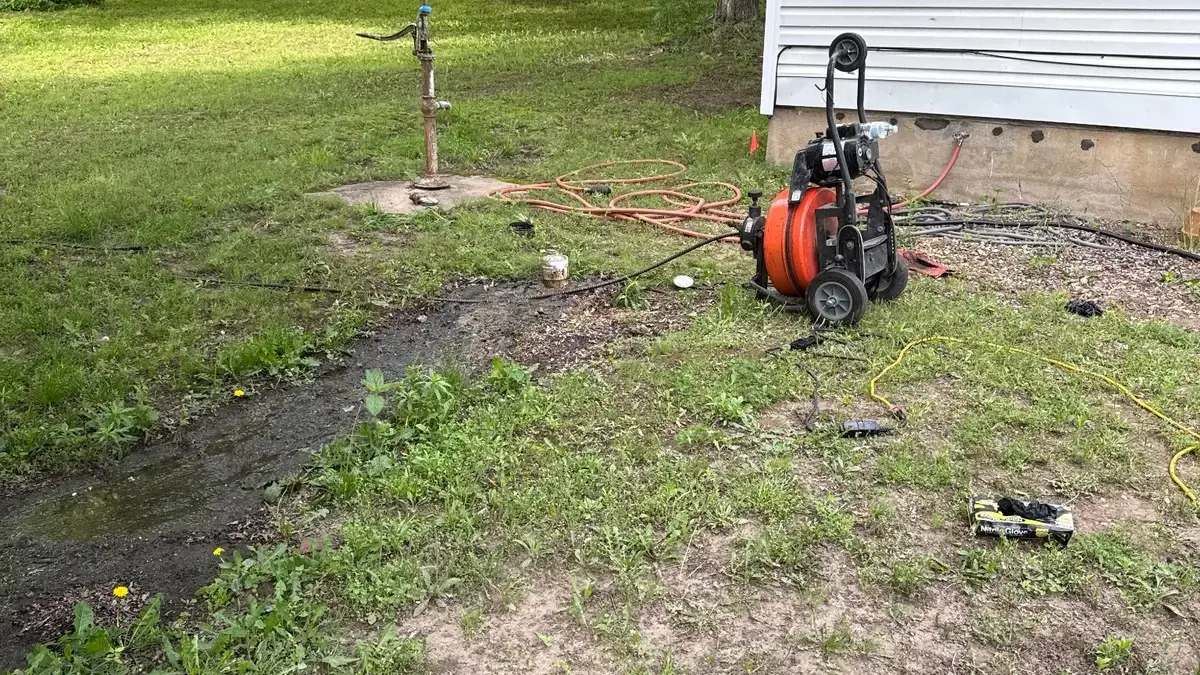
Cleaning
Best fit: A blockage with pipe that remains structurally serviceable
Roots, grease, sludge or debris restrict flow, and the line responds to the appropriate cleaning method.
Main sewer line cleaningLocalized spot repair
Best fit: One isolated damaged section with serviceable pipe around it
The camera and locator identify a limited break, offset, failed joint, transition, cleanout or utility-boring damage.
Localized sewer repairOpen-trench replacement
Best fit: Widespread failure, grade correction or a route that needs direct access
Several damaged areas, collapse, severe offsets, poor grade or complex taps and connections make full excavation more dependable.
Open-trench replacementTrenchless replacement
Best fit: A qualifying route where reducing full-route excavation matters
Pipe condition, route, access pits, utilities and connections allow pipe bursting and fused HDPE replacement.
Trenchless replacementWhat a Sewer Camera Can—and Cannot—Tell You
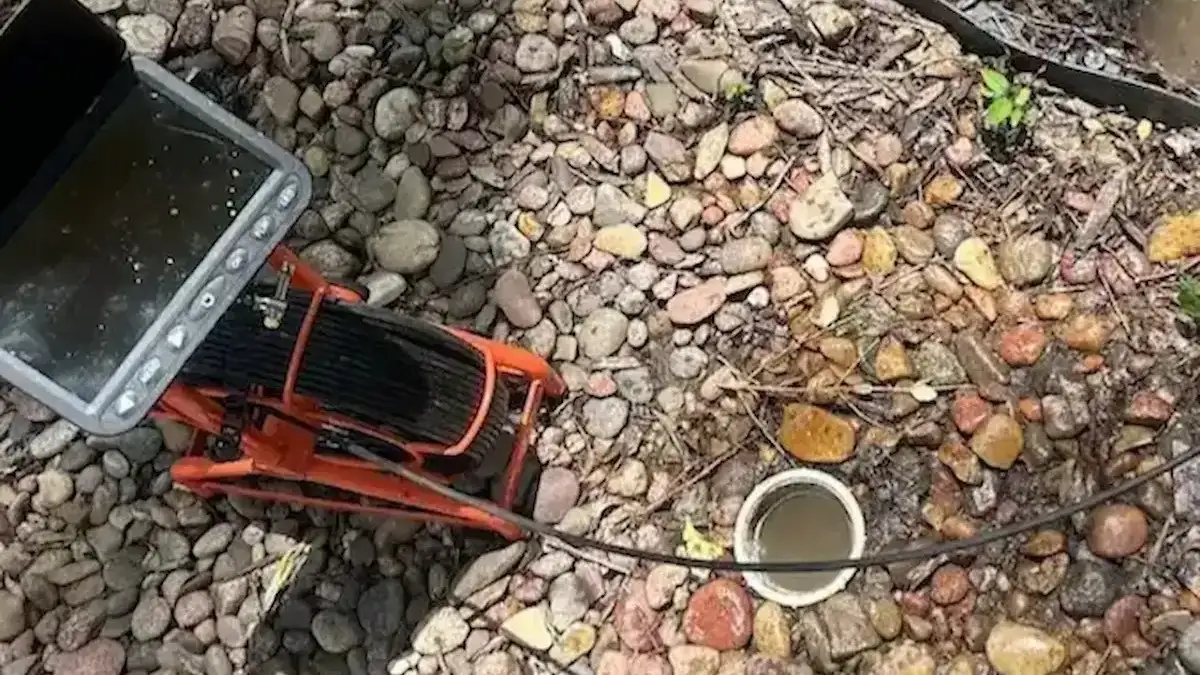
A camera can show visible roots, debris, offsets, separated joints, cracks, standing water, obstructions and inaccessible collapsed areas when it can reach them. A locator can help identify the camera head and suspected problem area above ground.
The camera does not replace the rest of the diagnosis. Heavy blockage may need to be cleared first, and the plumber still has to evaluate grade, depth, route, pipe material, connections, utilities and access.
How sewer camera inspection and locating work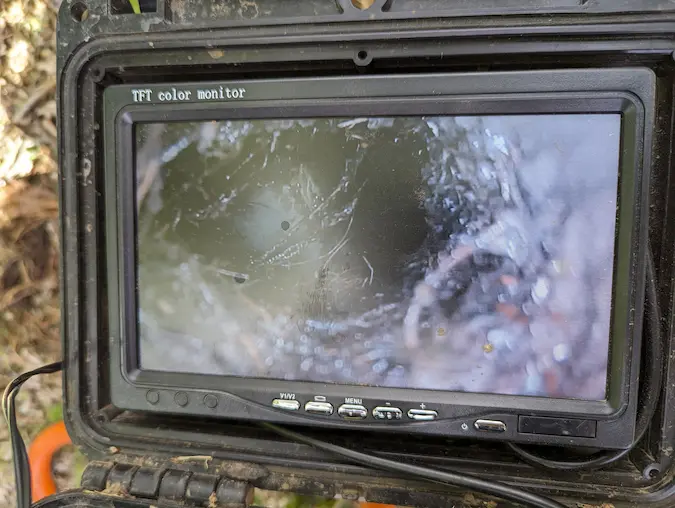
Six Factors That Shape the Recommendation
How much of the pipe is damaged?
One failed section can support a localized repair. Multiple breaks, widespread deterioration or repeated failures can point toward replacement.
Is the line still on grade?
A repair can restore a broken section, but it cannot correct a long belly or an unusable route without rebuilding the affected run.
Can the problem be located?
Camera and locating equipment help define the visible defect, its approximate position, the route and the depth before excavation is planned.
What sits above the sewer?
Driveways, patios, buildings, roads, landscaping, utilities and available access can change which repair method is practical.
Did cleaning restore dependable flow?
If the line repeatedly backs up or cleaning equipment cannot pass, inspection may reveal damage that cleaning cannot correct.
What connections must be rebuilt?
Taps, cleanouts, transitions, branches and the city-main connection can affect the repair limits and the method used.
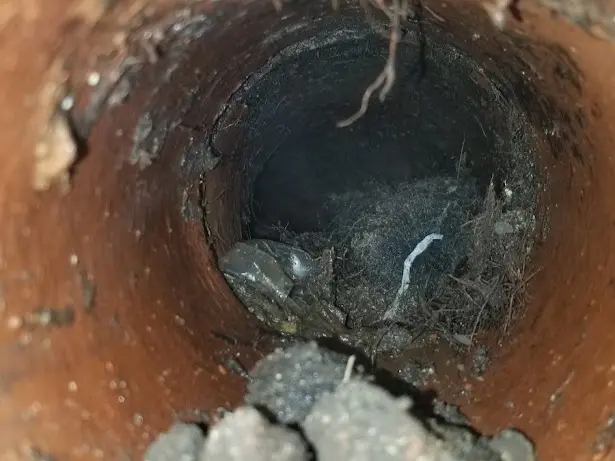
When Cleaning May Still Be the Right First Step
Roots and debris can block an otherwise serviceable line. Professional cleaning may restore flow and give the camera a clearer path. What matters next is whether the restriction returns and whether the pipe shows damage that allowed roots or debris to keep collecting.
If the problem is a fixture drain rather than the main sewer, start with the separate guide to why household drains keep clogging.
What Spot Repair Looks Like
A localized repair exposes the affected area, removes the failed pipe and reconnects serviceable sections with the planned pipe, fittings and transitions. It can be a good fit for a single break, failed joint, damaged transition, cleanout, tap or utility-boring defect.
Before calling it a spot repair, the surrounding pipe should be evaluated. Repairing one opening does not solve a line that has several failures or a long grade problem.
See localized sewer repair options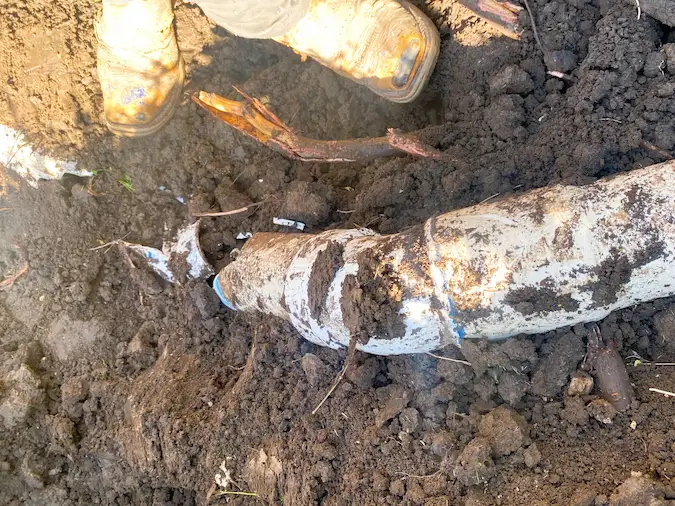
When Full Replacement Makes More Sense
Replacement becomes more likely when the failure extends beyond one dependable repair area. The method then depends on what must be corrected and how the route can be reached.
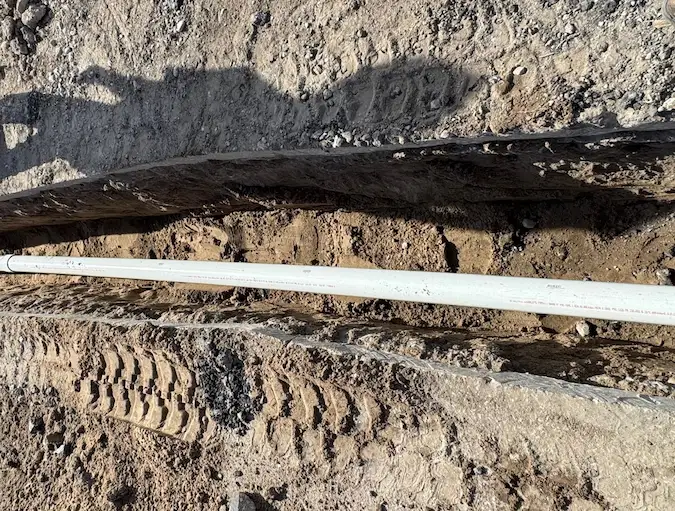
Open-trench replacement
Direct excavation gives access to correct grade, rebuild connections, change the route and replace badly damaged or collapsed sections. It may require a clearly defined plan for concrete, asphalt, roadway or landscape restoration.
Open-trench replacement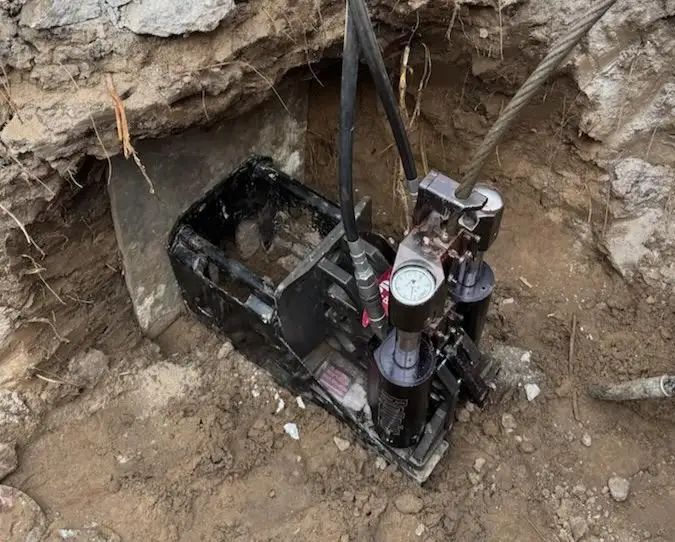
Trenchless pipe bursting
Pipe bursting can replace a qualifying sewer route with fused HDPE using access pits instead of excavating the full path. Route, utilities, connections and entry and exit access determine whether the project qualifies.
Trenchless replacementHow Findings Shaped Two Local Sewer Projects
These examples show why the recommendation depends on the findings and the site—not just the symptom the customer first noticed.
Derby, KS 67037
Multiple breaks in an original clay sewer
After a backup would not clear properly, a camera inspection found three broken areas near the tap connection. Because the failure was not limited to one dependable section, the project required excavation and replacement planning rather than another cleaning attempt.
Wichita, KS 67204
Open-trench replacement to a city manhole
This route required access through concrete, asphalt and the roadway. The scope included a new sewer line, a two-way cleanout, testing, backfill and defined surface restoration—an example of site access shaping the method.
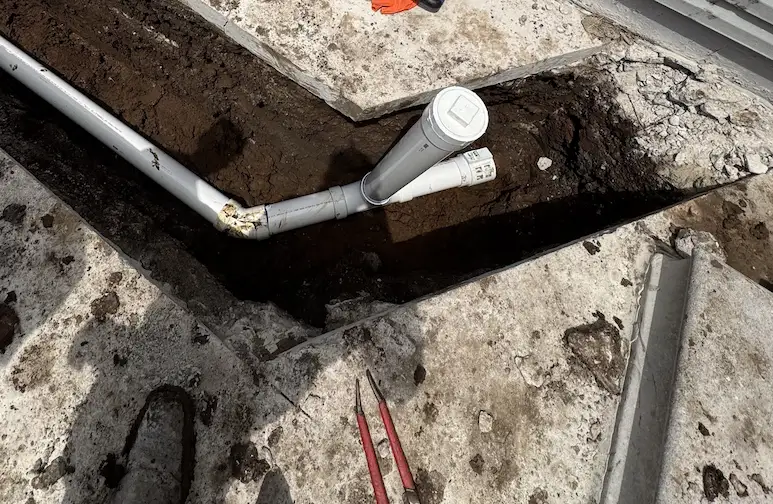
Plan future access, not just today’s repair
This El Dorado replacement included a new two-way cleanout. Cleanout location affects future camera, cleaning and maintenance access and should be considered during the project plan.
Compare Estimates by Scope, Not Just the Bottom Line
Two sewer estimates can describe very different projects. Ask whether each proposal includes the same repair limits and finish work.
- Camera findings and located repair area
- Pipe material, diameter and planned footage
- Taps, cleanouts, branches and transitions
- Open-trench, spot-repair or trenchless access
- Applicable permits, inspections and utility locating
- Testing and post-repair verification
- Backfill and rough-grade condition
- Concrete, asphalt, landscaping and finish restoration
Restoration is project-specific
Concrete, asphalt, roadway, irrigation, landscaping and finish restoration may be included, excluded or handled in phases. The written scope should say exactly what happens after the sewer work is tested and inspected.
Frequently Asked Questions
Can a broken sewer line be cleaned instead of repaired?
Cleaning can remove roots, grease, sludge and debris, but it does not reconnect a separated joint, rebuild a collapsed section or correct damaged pipe. Cleaning may restore temporary flow and make camera inspection possible, while the visible pipe condition determines whether repair is still needed.
When is a spot repair enough?
A spot repair may be appropriate when camera inspection and locating identify one limited damaged area and the surrounding pipe remains serviceable. The route, depth, nearby utilities, connections and access still have to support a dependable repair.
When does the whole sewer line need to be replaced?
Replacement may be recommended when there are several failures, widespread deterioration, collapse, severe offsets, repeated problems, poor grade or a route that cannot be corrected dependably with cleaning or one localized repair.
Does a sewer camera decide the repair by itself?
No. A camera shows visible conditions in accessible sections of the line. A plumber also considers symptoms, cleaning response, locating information, pipe material, grade, connections, depth, utilities and surface access before recommending a method.
Is trenchless replacement always better than open trench?
No. Trenchless pipe bursting can reduce full-route excavation on qualifying projects, especially beneath hard surfaces, but it still needs suitable access, a workable route and compatible connections. Open trench can be the better option when grade, route, taps or widespread site conditions need direct correction.
What should be included in a sewer repair estimate?
The scope should identify the planned repair limits, pipe and fittings, access method, cleanouts or taps, permits and inspections when applicable, testing, backfill and the exact concrete, asphalt, landscaping or finish restoration included or excluded.
Start with evidence
Need Help Understanding a Sewer Line Problem?
PD Plumbing handles sewer cleaning, camera inspection and locating, localized repair, open-trench replacement and trenchless replacement throughout Wichita and nearby Kansas communities.
Keep Reading
More Sewer Line Guides
Keep reading helpful guides from PD Plumbing Heating & Cooling.