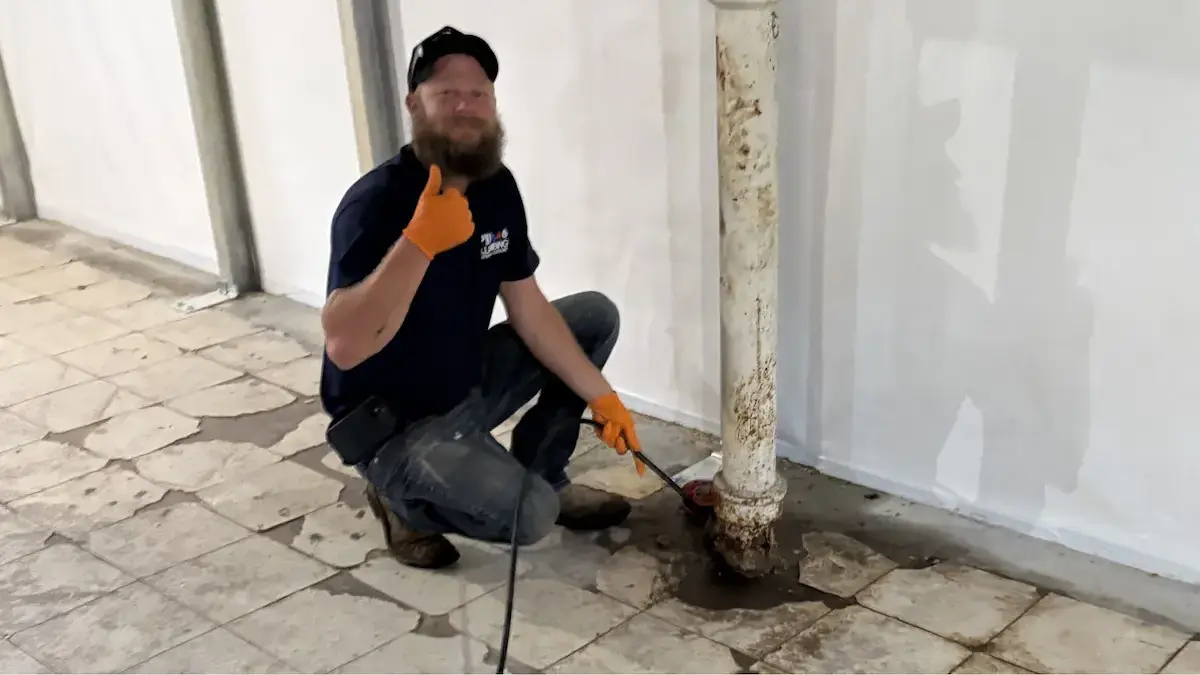
When Is Hydro Jetting the Right Choice—and When Is It Not?
Hydro jetting uses a controlled combination of water pressure, flow and a selected nozzle to loosen and move material through an accessible drain or sewer line. It can be especially useful for grease, sludge and soft buildup, but it is not a universal upgrade from sewer cabling.
The right method depends on what is in the line, the pipe’s material and condition, available access and the purpose of the cleaning. Roots or a firm obstruction may call for cable equipment or specialized cutting tools. Broken, separated or badly graded pipe needs repair evaluation—not more cleaning.
Quick answer
Hydro jetting may be the better fit when qualifying grease, sludge or wall buildup needs to be loosened and flushed from an accessible line. Cabling may be the better first fit for roots or a hard physical obstruction. Neither method repairs damaged pipe, and method selection should consider the obstruction, access and pipe condition.
What Hydro Jetting Actually Does
A sewer jetter sends water through a flexible hose and a nozzle selected for the line and obstruction. The water loosens qualifying grease, sludge and buildup and helps move that material through the line.
Because sewer lines and obstructions differ, hydro jetting is not automatically the correct method for every backup. Pipe material, suspected condition, access and the material in the line help determine whether jetting or another cleaning method fits the job.
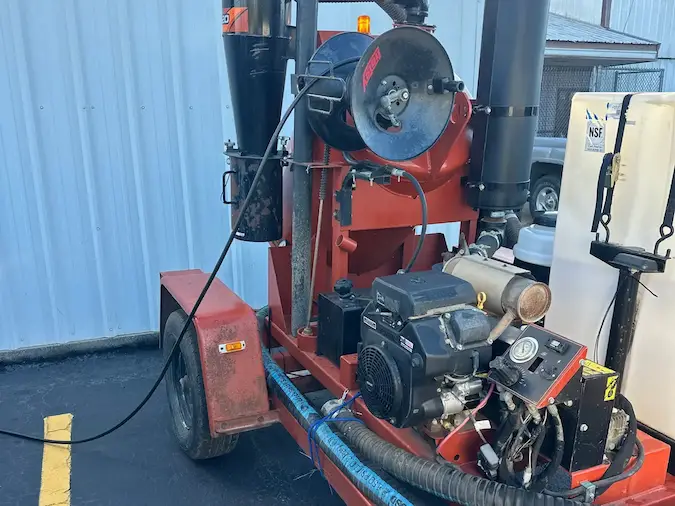
When Hydro Jetting May Be the Better Fit
These conditions can support a jetting recommendation, but they do not replace an evaluation of the actual pipe and access at the property.
Grease and soft buildup
Water flow can help move qualifying grease, sludge and soft deposits from an accessible line instead of only opening a narrow path through them.
Material coating the pipe wall
An appropriate nozzle can direct water toward buildup along the accessible pipe wall when the pipe condition and route support jetting.
Debris that needs to be flushed
Flow matters because loosened material still has to travel out of the line rather than remain downstream and collect again.
A known recurring condition
Prior cleaning results, removed material and inspection findings may support jetting when they point to buildup that water can effectively carry away.
Hydro Jetting and Sewer Cabling Solve Different Problems
“Jetting versus cabling” is not a simple better-or-worse choice. Professional cleaning may use one method or a sequence of methods according to what the equipment encounters.
| Condition | Hydro jetting | Sewer cabling |
|---|---|---|
| Grease, sludge or soft wall buildup | Often considered when the pipe condition and access support jetting and the material needs to be loosened and flushed. | May restore a path, but may not flush soft material from the accessible pipe wall as completely. |
| Roots or a firm physical obstruction | May require specialized root-cutting equipment; a standard jetting nozzle is not automatically the right tool. | Cable equipment with an appropriate cutting head may be the more direct first method for qualifying roots or hard obstructions. |
| Unknown or questionable pipe condition | Pipe material, condition and access need evaluation before jetting is selected. | Also requires method and head selection; it is not risk-free or suitable for every damaged line. |
| Collapsed, separated or badly graded pipe | Cannot rebuild the pipe or correct its route. | Cannot rebuild the pipe or correct its route. |
When Hydro Jetting May Not Be the Right First Step
High-pressure water should not be treated as the default response to every slow drain or backup. Another method or more information may be needed first when:
- The pipe is fragile, damaged or of uncertain condition.
- A hard obstruction may respond more directly to cable equipment or a cutting head.
- Access does not provide a practical route for the hose, water or removed material.
- The symptoms point to one fixture or branch drain rather than the main sewer.
- A collapse, separation, grade problem or missing pipe—not removable buildup—is limiting flow.
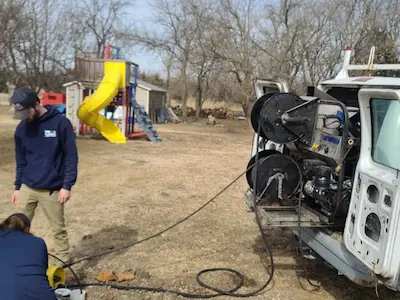
How Hydro Jetting Is Matched to the Line
Hydro jetting is adjusted to the line being cleaned. The technician considers the type of buildup, pipe size and material, suspected condition and available access before selecting the equipment and nozzle. The goal is to remove qualifying buildup and move it out of the line effectively.
What the Technician Evaluates Before Choosing a Method
What is restricting the line?
Grease and sludge behave differently from roots, wipes, hard debris or a structural obstruction.
What pipe is being cleaned?
Diameter, material, age and suspected condition affect whether jetting fits and how the work should be approached.
Where is safe access?
The available cleanout, route and ability to manage water and removed material influence whether jetting is practical.
What happened during earlier service?
Recurring symptoms, removed material, equipment travel and previous camera findings can help distinguish buildup from a pipe problem.
Camera Inspection May Come Before or After Jetting
A camera may be useful before jetting when pipe condition, route or the type of obstruction is uncertain. But standing water, grease, roots or debris can block the lens or stop the camera before it reaches the area that matters.
In other situations, cleaning first creates the visibility needed for a more useful scope afterward. A camera documents only the accessible pipe it can reach and clearly see; it does not make the cleaning method automatically safe or diagnose hidden soil conditions by itself.
What Hydro Jetting Cannot Repair
A clean line and a sound line are not the same thing. Hydro jetting may restore flow by removing qualifying material, but it does not change the structure or route of the pipe.
- Reconnect a separated joint or failed transition
- Rebuild cracked, broken, missing or collapsed pipe
- Correct a belly, poor grade or unusable sewer route
- Guarantee that roots, grease or debris will never return
- Prove every pipe section is sound when visibility is limited
- Replace diagnosis when symptoms and access point to another problem
What Happens After Hydro Jetting?
The next step follows the line’s response and the evidence available. Successful cleaning may only call for monitoring; recurrence, limited equipment travel or suspected structural damage can justify a different next step.
Confirm flow and monitor
If the material is removed and the line responds dependably, the next step may simply be watching for returning symptoms.
Inspect the accessible sewer
Recurring backups, roots, limited equipment travel or suspected damage may justify a separate camera inspection and locating service.
Sewer camera inspectionEvaluate a pipe repair
Visible structural damage, repeated failures or a grade and route problem may lead to localized repair or replacement planning.
Repair-versus-replacement guideFrequently Asked Questions
Is hydro jetting always better than sewer cabling?
No. Hydro jetting and cable equipment address different conditions. Jetting may fit grease, sludge and soft buildup on a qualifying line. Cable equipment and an appropriate cutting head may fit roots or a firm physical obstruction. Sometimes a job uses more than one method.
Can hydro jetting remove tree roots?
Root work depends on the severity, pipe condition and available equipment. Some jetters can use specialized hydraulic root-cutting attachments, while cable cutting heads may be the more appropriate first tool. Removing roots restores space in the line when possible, but it does not repair the opening where they entered.
Is hydro jetting safe for every older sewer line?
No method should be treated as automatically appropriate for every pipe. Material, age, access, visible or suspected damage and prior findings should guide the cleaning approach. A questionable line may need inspection or another method before jetting.
Does every hydro-jetting job need a camera inspection first?
Not necessarily. A camera may be useful before jetting when pipe condition or the obstruction is uncertain, or after cleaning when buildup previously blocked the view. The useful sequence depends on access, symptoms, blockage history and the decision that needs to be made.
How often should a sewer line be hydro jetted?
There is no responsible universal schedule for every home or business. Method and timing should be based on symptoms, known grease or buildup, recurrence, pipe condition and prior service findings—not an invented annual interval.
Can hydro jetting repair a broken or bellied sewer?
No. Hydro jetting removes or flushes qualifying material. It cannot reconnect separated pipe, rebuild a collapsed section, replace missing pipe or correct a sewer route that does not drain properly.
No Universal Jetting Schedule
A home or business does not automatically need hydro jetting every year or every two years. Recurrence, grease-producing use, prior findings, pipe condition and the way the line responds are more useful than a generic calendar.
Start with the line and obstruction
Need Help Choosing a Sewer-Cleaning Method?
PD Plumbing evaluates the symptoms, access, pipe and likely obstruction before recommending hydro jetting, sewer cabling or another next step for an accessible line.
Keep Reading
More Sewer Line Guides
Keep reading helpful guides from PD Plumbing Heating & Cooling.