Should You Get a Sewer Scope Before Buying a Home in Wichita?
A home inspection can reveal a great deal about a property, but the building sewer is underground and may not be included in the inspector's standard work. A sewer scope gives a plumber a live camera view inside accessible portions of that line before the buyer closes.
PD Plumbing performs sewer scopes for home buyers and regularly receives calls connected with Wichita-area real-estate transactions. The technician discusses visible findings with the buyer or realtor so they can understand what was observed and whether another step should be considered.
Quick answer
A sewer scope can be useful before closing because it provides direct visual evidence from accessible sections of the building sewer. It may reveal obstructions, roots, damaged pipe, visible joints or standing water, but it is not a guarantee of future performance and it cannot evaluate portions the camera cannot reach or clearly see.
What Happens During a Sewer Scope?
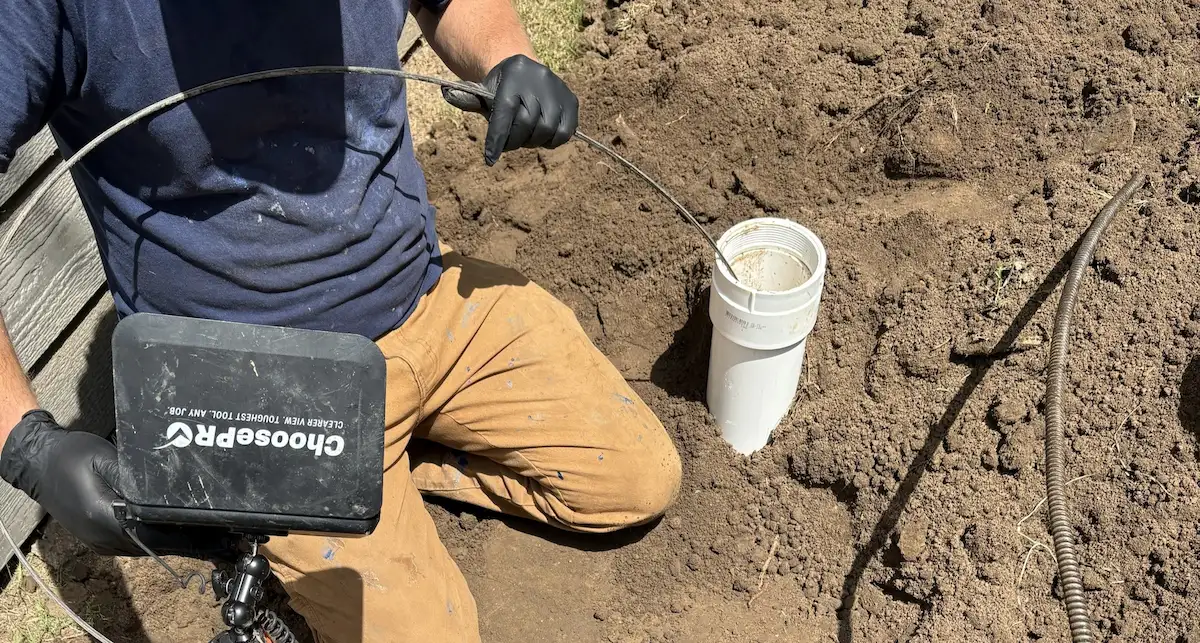
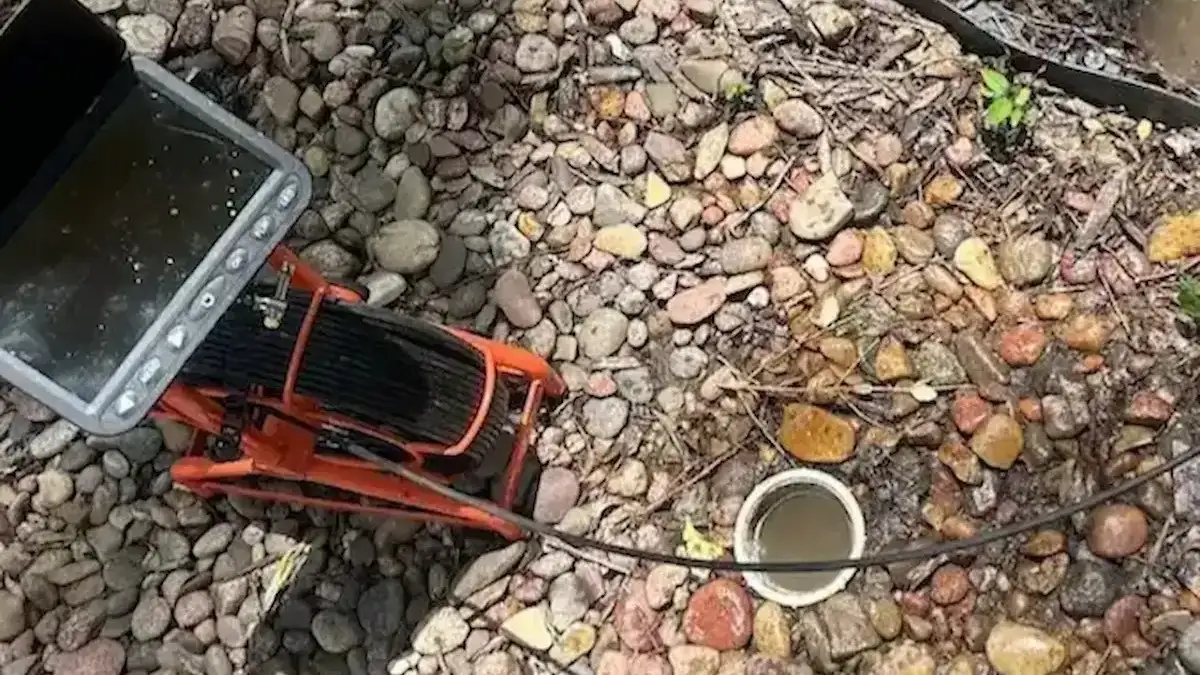
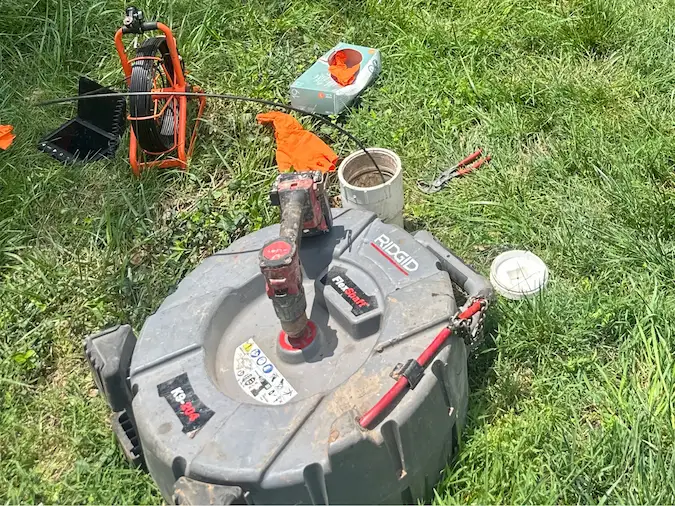
The technician identifies a suitable access point, such as an exterior cleanout, and feeds a sewer camera into the accessible line. The camera transmits a live view while the cable distance helps document where visible conditions appear along the run.
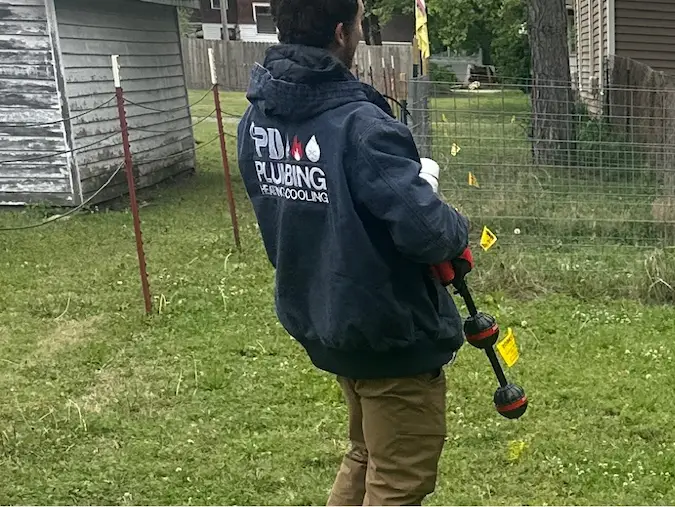
When locating is part of the work, a receiver can help trace the camera head's position above ground. This information supports the inspection, but final repair planning may also require pipe, route, depth, utility and access evaluation.
What the Camera May Reveal
The technician reviews the complete camera run rather than diagnosing the line from one isolated frame. Depending on access, cleaning status and visibility, the inspection may document the following conditions.
Roots and other obstructions
The camera may show material extending into the accessible pipe or restricting the camera's path.
Joints, connections and transitions
The technician can review visible changes between pipe sections and connections along the inspected route.
Cracks or damaged sections
Open cracks, broken areas and some displaced sections may be visible when the camera can reach and clearly view them.
Standing water or restricted flow
Water remaining in part of the line can be documented, although the full cause and grade require additional interpretation.
Describe the evidence before naming the defect
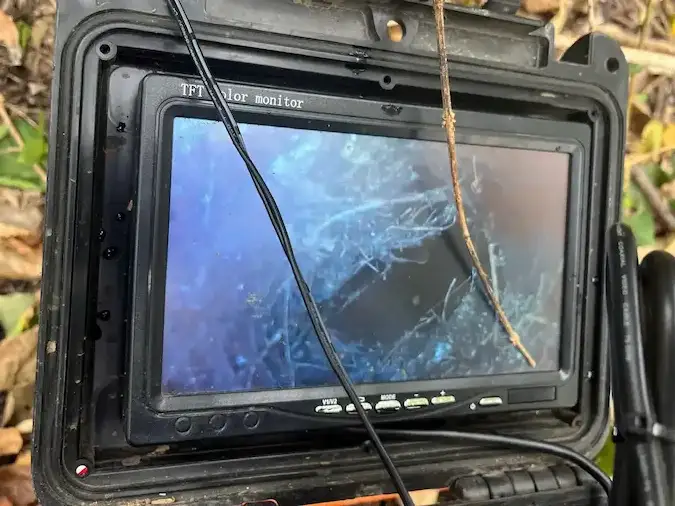
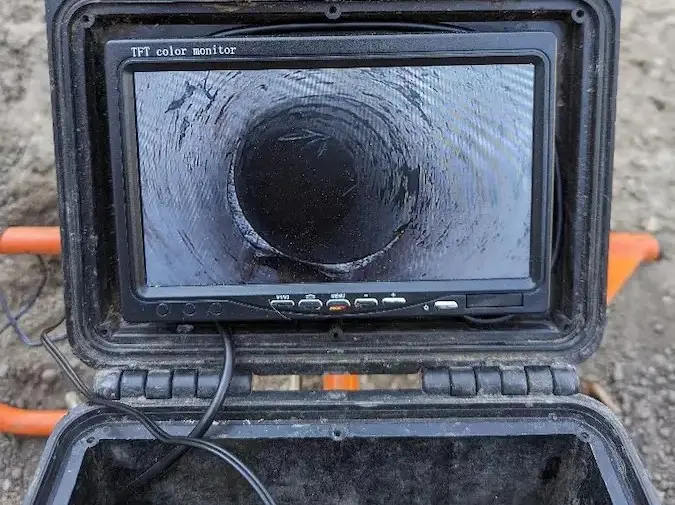
This monitor shows branching material within the visible pipe. The technician uses the complete camera run, movement, distance and surrounding conditions to identify what it is and how much of the line is affected.
What a Sewer Camera Cannot Confirm by Itself
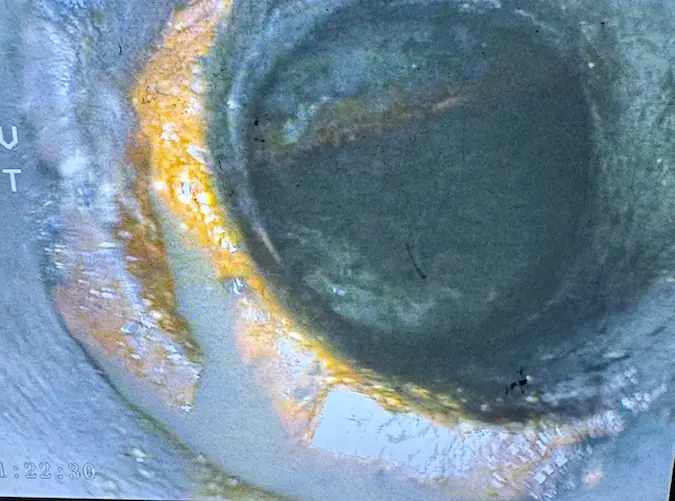
A camera only shows what is visible in the sections it can reach. It cannot see through buildup, standing water or an obstruction, and one image may not establish pipe material, severity, grade or the repair method needed.
The inspection also does not guarantee that the line will never clog or fail. Symptoms, cleaning response, camera movement, locating information, route, connections and site access all add context.
When the Line May Need Cleaning First
A blocked or heavily coated line may prevent the camera from traveling far enough to provide a useful view. In that situation, the technician may recommend clearing the obstruction with the appropriate sewer-cleaning method and then inspecting again. The need for cleaning is based on access and conditions—not an automatic part of every scope.
Learn about main sewer line cleaningWhy Access and Location Matter
The available cleanout affects where the camera enters and which direction it can travel. When a visible concern needs to be located, above-ground locating helps connect the camera evidence with the approximate route and position in the yard. That can be important if further evaluation or excavation is considered.
Questions to Ask About the Sewer-Scope Findings
A useful conversation focuses on what was inspected, what was visible and where uncertainty remains. Buyers and realtors can use these questions when discussing the results.
- Where will the technician access the sewer line?
- How much of the accessible line was the camera able to inspect?
- Did an obstruction limit the view or require cleaning first?
- What visible conditions did the technician identify?
- Was the camera head located above ground where a concern appeared?
- Do the findings suggest monitoring, cleaning, repair or further evaluation?
- Are there portions of the line the inspection could not confirm?
What Happens After the Inspection?
A sewer scope is evidence for the next decision, not an automatic recommendation to excavate. The appropriate next step depends on the visible condition, how much of the line was inspected and the property factors the technician can verify.
Continue monitoring
A usable line without an immediate repair finding may simply call for informed ownership and attention to future symptoms.
Clean the main sewer
Roots, grease, sludge or debris may need to be cleared to restore flow or provide a more complete camera path.
Main sewer line cleaningEvaluate a localized repair
A limited damaged area with serviceable pipe around it may be considered for excavation and spot repair.
Localized sewer repairPlan replacement
Multiple failures, collapse, widespread deterioration or grade and route problems can lead to replacement planning.
Repair-versus-replacement guideFrequently Asked Questions
Is a sewer scope normally part of a general home inspection?
Do not assume it is included. Ask the home inspector or realtor exactly what the inspection covers. A sewer scope requires camera access to the building sewer and is often scheduled as a separate plumbing service.
Should a buyer scope the sewer at a newer home?
Pipe age is only one factor. Access, installation, past work, symptoms and the buyer's need for information can also matter. A buyer can discuss the property and inspection goals with the plumber before deciding.
Can the camera inspect the entire sewer line?
Not always. The inspection is limited to sections the camera can access and travel through. Heavy buildup, roots, a blockage, a sharp transition, standing water or damaged pipe may restrict the view or stop the camera.
Does the sewer need to be cleaned before it can be scoped?
Only when conditions prevent a useful inspection. If an obstruction or heavy buildup blocks the camera's path or view, the technician may recommend the appropriate cleaning before attempting a more complete camera run.
Does PD discuss the sewer-scope findings with buyers or realtors?
Yes. PD Plumbing performs scopes for home buyers, frequently works with realtor-related calls and has the technician discuss the visible findings and appropriate next steps. Ask when scheduling if your transaction requires any particular documentation.
Does a concerning camera image automatically mean replacement?
No. The plumber considers the complete camera run, whether the line was clean enough to inspect, the location and extent of the condition, surrounding pipe, route, connections, access and other site factors before recommending a next step.
Plan before closing
Need a Sewer Scope for a Wichita-Area Home Purchase?
PD Plumbing scopes accessible sewer lines for home buyers and discusses the visible findings with buyers and realtors. Visit the service page to understand access, camera and locating details before scheduling.
Keep Reading
More Sewer Line Guides
Keep reading helpful guides from PD Plumbing Heating & Cooling.