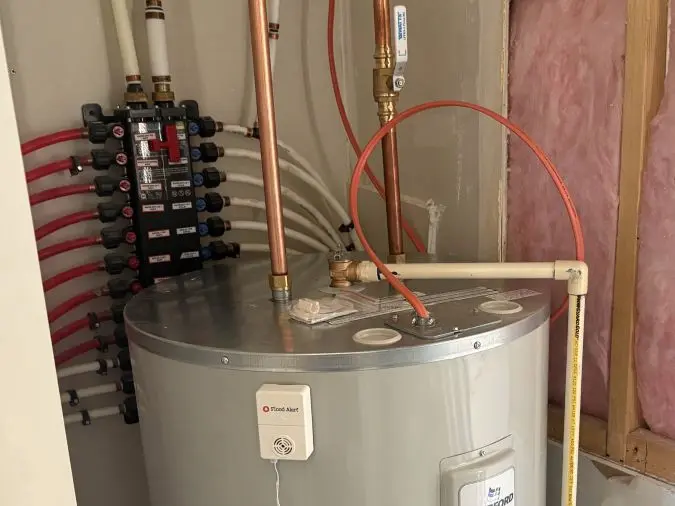
Tank vs. Tankless vs. Heat Pump Water Heaters in Wichita
Choosing a replacement water heater is not just a question of tank or tankless. The right system has to match the household's hot-water demand, the available fuel or electrical service, the installation space and the way the home is already plumbed.
A conventional storage tank can still be the practical choice in many homes. Tankless equipment can save mechanical-room space and provide continuous hot-water delivery within its rated capacity. Heat-pump water heaters can be an efficiency-focused electric option when the location provides the space, airflow and drainage the equipment needs.
This guide focuses on choosing and sizing the equipment. If your existing heater is leaking, shutting down or no longer producing reliable hot water, start with our water-heater warning-sign and repair guide.
Quick Answer
There is no single water-heater type that is best for every Wichita-area home. Start with peak hot-water demand, then check the home's fuel or electrical capacity, venting, installation space and access. The equipment should be sized around the house and the way the occupants use hot water - not selected from gallon capacity alone.
Tank, Tankless or Heat Pump: What Changes?
Each system solves the same basic problem differently. Comparing the tradeoffs first makes the sizing and installation questions easier to understand.
Conventional Tank
Stores a ready supply of hot water and can be a practical choice when the home already has a compatible tank-water-heater setup.
Often worth considering when
Straightforward replacements, predictable storage capacity and homes where the existing fuel and venting arrangement still makes sense.
Check first
Tank dimensions, first-hour delivery, recovery, available space and actual household demand.
Tankless
Heats water as it is needed instead of storing a large volume in a tank.
Often worth considering when
Homes where space savings and longer continuous hot-water operation are priorities.
Check first
Simultaneous flow demand, temperature rise, gas or electrical capacity, venting and installation requirements.
Heat Pump
Uses an electric heat pump to move heat from the surrounding air into stored water.
Often worth considering when
Efficiency-focused installations with suitable electrical service, space, airflow and a practical condensate-drain solution.
Check first
Physical tank size, installation location, airflow, condensate drainage and peak hot-water demand.
Size for the house
How Should a Water Heater Be Sized?
Household count is only a starting point. Two homes with the same number of occupants can have very different peak demand depending on bathrooms, shower use, tubs, appliances and whether several fixtures are used at the same time.
Stored hot water
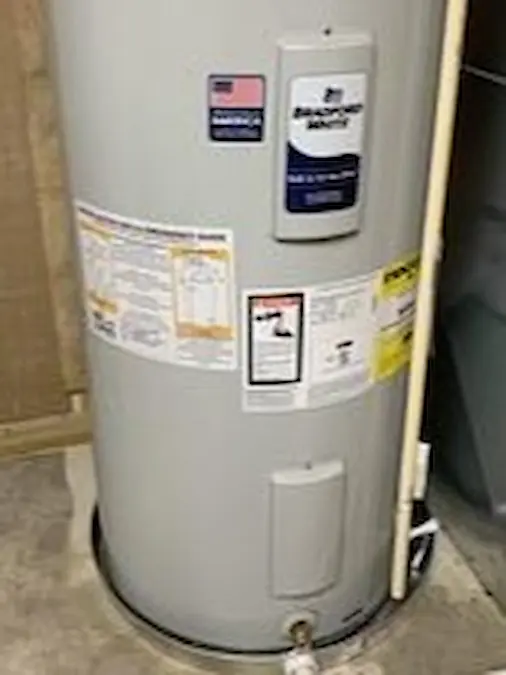
Conventional Tank Water Heaters
Storage water heaters keep a tank of water hot and ready for use. They can be a practical replacement when the home already has a compatible location, fuel source and venting or electrical setup.
Gallon capacity does not tell the whole story. Storage-water-heater comparisons also use First Hour Rating, which estimates how much hot water the heater can deliver during a busy hour starting with the tank fully heated. Recovery performance and actual household demand still matter when choosing a system.
A 40- or 50-gallon label should not be treated as an automatic household-size recommendation. The goal is to match usable delivery to the way the home actually uses hot water.
Heat water on demand
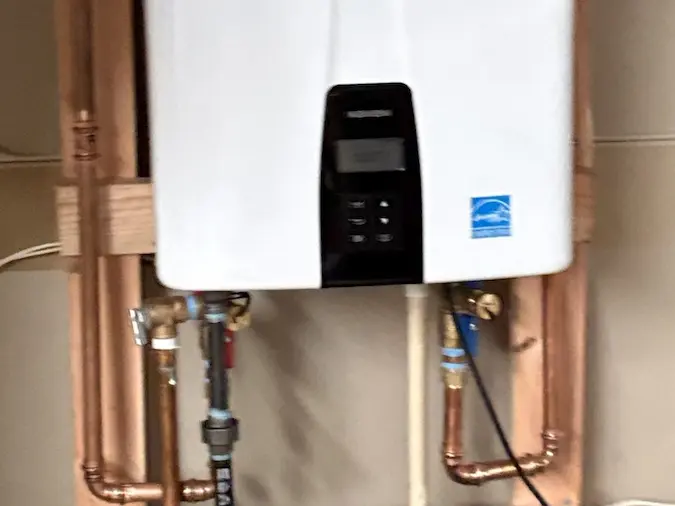
When Does Tankless Make Sense?
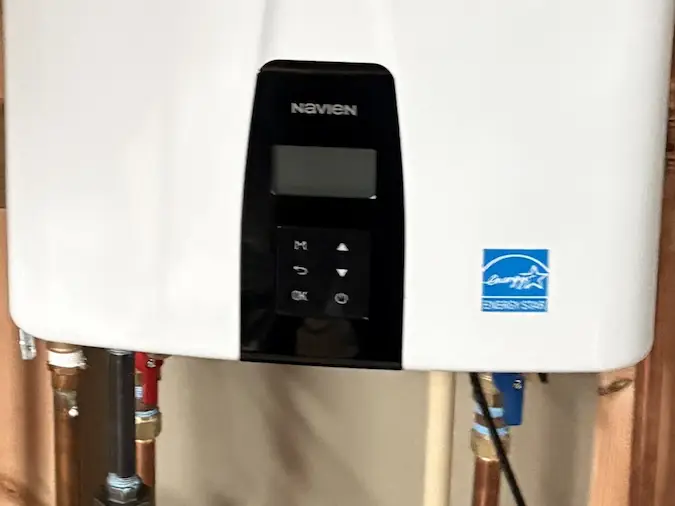
Tankless water heaters heat water as it passes through the equipment, so there is no large storage tank waiting to recover after it is depleted.
Continuous hot-water operation does not mean unlimited capacity. Tankless equipment has a rated flow range, and sizing depends on how many fixtures may need hot water at the same time and how much the incoming water temperature must be raised.
The installation also has to support the equipment. Depending on the model and fuel source, that can include gas capacity, venting, electrical requirements, condensate handling and the available wall or mechanical-room space.
Efficiency-focused electric option
When Does a Heat-Pump Water Heater Fit?
A heat-pump water heater uses electricity to move heat from the surrounding air into stored water instead of relying only on electric resistance heating.
The equipment needs an installation location that works for its physical size and operating requirements. Airflow around the unit and a way to drain condensate are important parts of the installation.
Heat-pump tanks are also commonly larger than conventional electric tanks. For homes with heavier peak demand, a larger tank can help the system store more hot water and reduce how often backup resistance heat is needed.
Higher hot-water demand
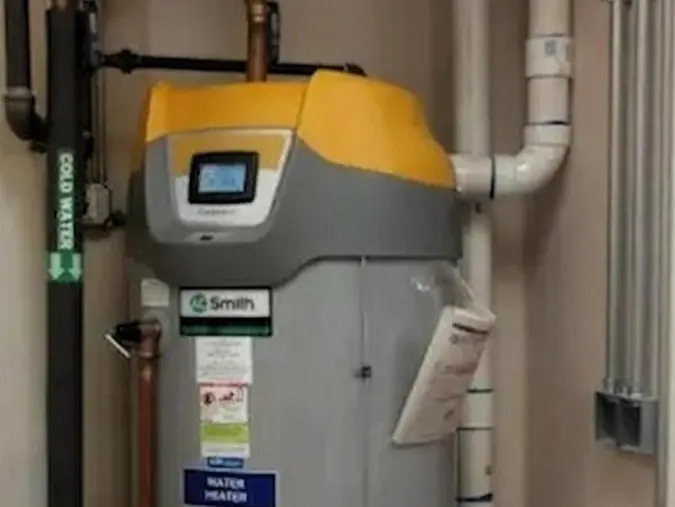
When Does a Larger-Capacity Tank Make Sense?
Some homes and properties need more stored hot water than a typical residential setup. Multiple bathrooms, large tubs, overlapping showers or other heavy-use periods can change the amount of hot water that needs to be available during peak demand.
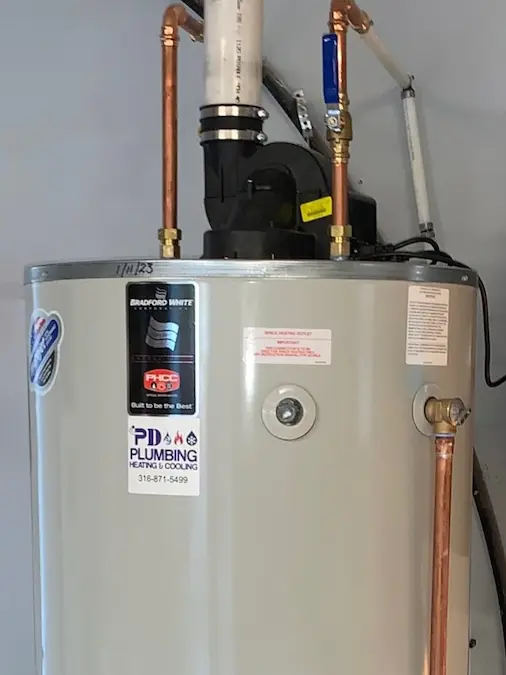
PD also works with larger-capacity storage equipment, including 75-gallon systems. A larger tank is not automatically the better answer; it should be matched to the demand, fuel or electrical setup, available space and the overall installation.
The equipment has to fit the home
The Existing Installation Matters
Replacing a water heater is not always a same-capacity, same-footprint swap. Two heaters with the same nominal gallon rating can have different heights and diameters, and changes in insulation or equipment design can change the outside dimensions.
That can be especially important in older manufactured homes and other properties with tight water-heater closets. A 50-gallon heater that fit the original compartment years ago does not prove that every current 50-gallon model will fit the same opening.
PD checks the actual installation space, access, connections, venting or electrical requirements and surrounding plumbing before treating gallon capacity as a direct replacement specification.
Separate equipment from water treatment
Does Water Quality Affect the Decision?
Water conditions can affect mineral buildup and the maintenance needs of both storage-tank and tankless systems. But choosing a different type of water heater does not solve a separate water-quality problem by itself.
Water softening, whole-house filtration and drinking-water treatment address different goals. If hardness or other water-quality concerns are part of the project, those options should be evaluated separately from the water-heater selection.
For the water-treatment side of that decision, see our Wichita water-softening and filtration guide or review PD's water-filtration services.
A Better Way to Compare the Options
Instead of starting with a brand or gallon number, start with the home's demand and installation constraints. Then compare which equipment can meet those requirements well.
Start With Demand
The heater has to keep up with the way the household actually uses hot water. Peak use matters more than choosing a gallon number from a simple household-size chart.
Check the Installation
Fuel, electrical service, venting, drain access, room volume, equipment clearances and the path into the mechanical space can change which options are practical.
Compare the Whole System
Equipment efficiency matters, but so do installation requirements, hot-water delivery, maintenance needs and how well the system fits the home.
Compare the actual installation
Need Help Choosing a Water Heater?
PD Plumbing can evaluate the existing equipment, hot-water demand and installation conditions and explain tank, tankless and heat-pump options that fit the property.
Keep Reading
More Water Heaters Guides
Keep reading helpful guides from PD Plumbing Heating & Cooling.