Whole-Home Water Filtration vs. Reverse Osmosis: What's the Difference?
A whole-home water filter and an under-sink reverse-osmosis (RO) system are installed in different places for different reasons. One works on incoming water before it reaches household fixtures. The other focuses on water used for drinking and cooking at the kitchen sink.
The right system depends on which faucets need treated water and what you want to address. Sediment throughout the house, an unpleasant taste at the kitchen sink and hard-water scale can require different solutions.
Quick Answer
Whole-home filtration treats water at the main supply, so a properly sized system can serve multiple household fixtures. Under-sink reverse osmosis treats drinking water at a dedicated faucet. What either system actually reduces depends on its design and documented performance. Some homes need one; others benefit from both.
The Biggest Difference Is Where the Water Gets Treated
Before comparing filter media or special features, consider which faucets and appliances you want the treatment to serve.
Treatment at the main water supply
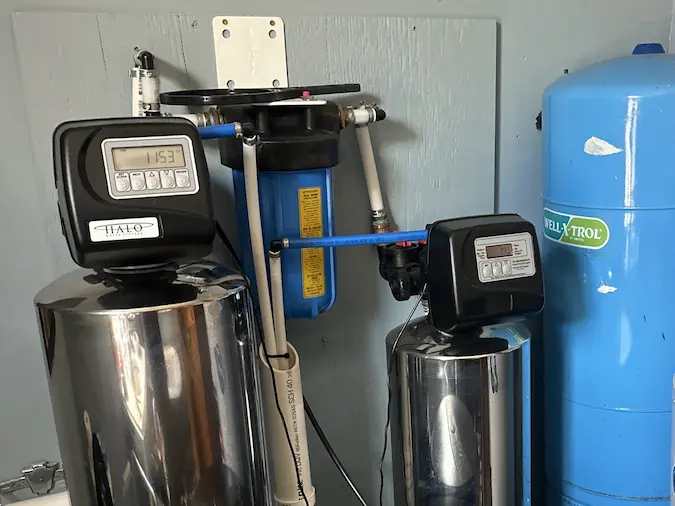
Whole-home filtration
A filter installed where water enters the house treats incoming water before it branches to many household fixtures. The installation must fit the home's flow and plumbing needs.
Treatment at the kitchen sink
Reverse osmosis (RO)
An under-sink RO system treats drinking water through its own faucet. It does not automatically supply showers, toilets, washing machines or every tap in the house.
What whole-home filters can do
Filtration Before Water Reaches Your Fixtures
Whole-home equipment can address concerns such as sediment or certain taste and odor problems when the filter is selected for those conditions. Sediment and carbon filters do different jobs, so the equipment should match what you want to reduce.
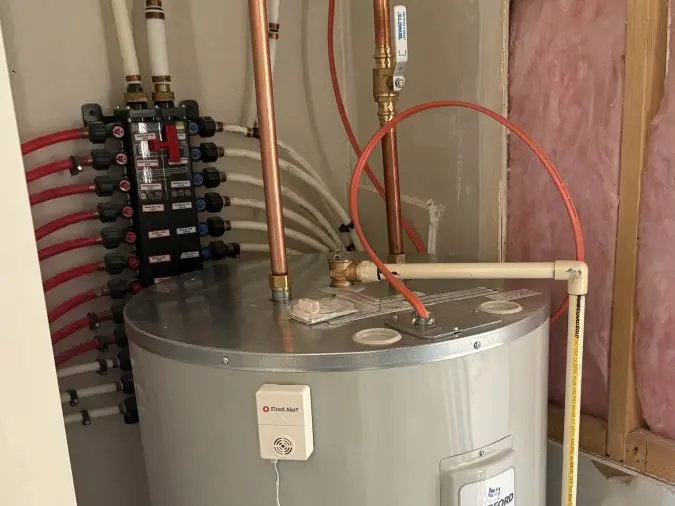
Installation also depends on available space, household water flow, pressure, bypass piping and access for future maintenance. These are practical considerations even when two homes have the same type of water supply.
What if your main concern is hard-water scale?
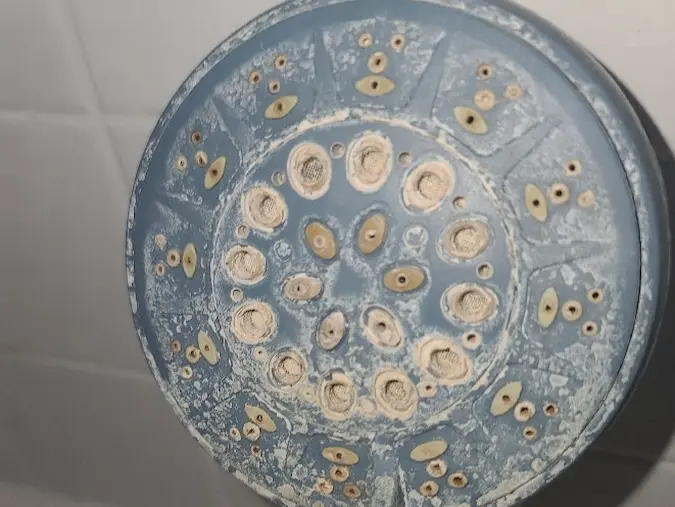
Standard carbon and sediment filters do not remove calcium and magnesium the way a conventional ion-exchange softener does. Our water-softener, filtration and RO comparison explains the difference.
Drinking and cooking water
What Happens Inside an Under-Sink RO System?
Reverse osmosis uses a membrane to separate some dissolved material from treated drinking water. Residential RO systems commonly combine the membrane with other filter stages. The substances reduced depend on the specific model and its tested performance.
RO is usually installed for water used at the kitchen sink, rather than water for showers or laundry. Some systems can also supply a refrigerator line when the model and installation allow.
Prefilters
Depending on the model, cartridges help protect the membrane from sediment or substances that could affect its performance.
RO membrane
Water passes through a membrane that separates a portion of dissolved material from the treated water. Specific reduction claims are model-dependent.
Storage and faucet
Many systems have a small pressure tank and a separate drinking-water faucet; tankless designs also exist. Some have an additional polishing filter.
Drain connection
Most residential RO systems send a reject-water stream to the drain. Water use, pressure and replacement intervals depend on the equipment.
If you are trying to reduce a specific substance, check the RO system's certification and the substance named in its claim. NSF explains why a general certification label does not mean a product has been tested to reduce everything. See its home water-treatment guidance.
Three Checks Before Choosing a System
A whole-home filter and an under-sink RO unit can work together, but they serve different needs. These checks help identify which approach is worth discussing for your home.
Which fixtures need treated water?
If the concern appears throughout the home, treatment at the main supply may be useful. If your goal is drinking and cooking water, an under-sink RO faucet may be the better place to start.
What are you trying to address?
Sediment at several taps is different from a taste concern at the kitchen sink. A test result or specific water-quality report helps narrow down which type of equipment is worth considering.
Where does your water come from?
For city water, review the utility's water-quality report. For a private well, use appropriate water testing before selecting a system; nearby homes may have different conditions.
If your home uses a private well, the EPA's well-water testing guidance can help you decide what to test. A drinking-water concern that may affect health should be evaluated with appropriate testing and advice, rather than assuming any filter will resolve it.
When Whole-Home Filtration and RO Work Together
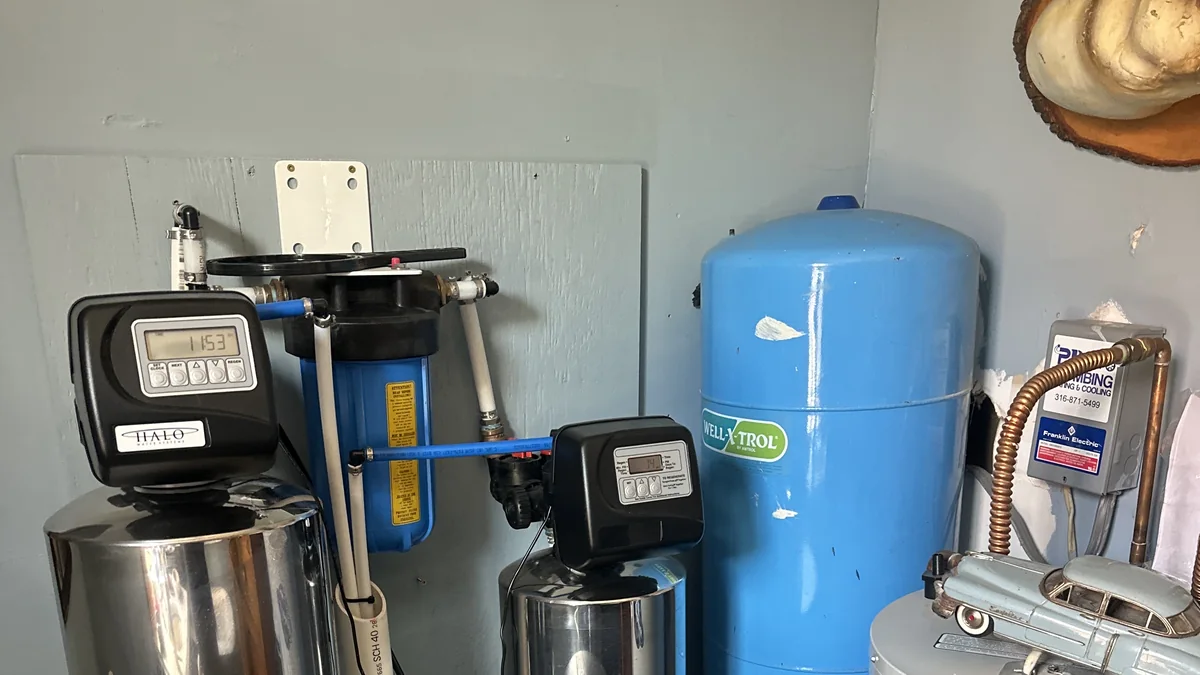
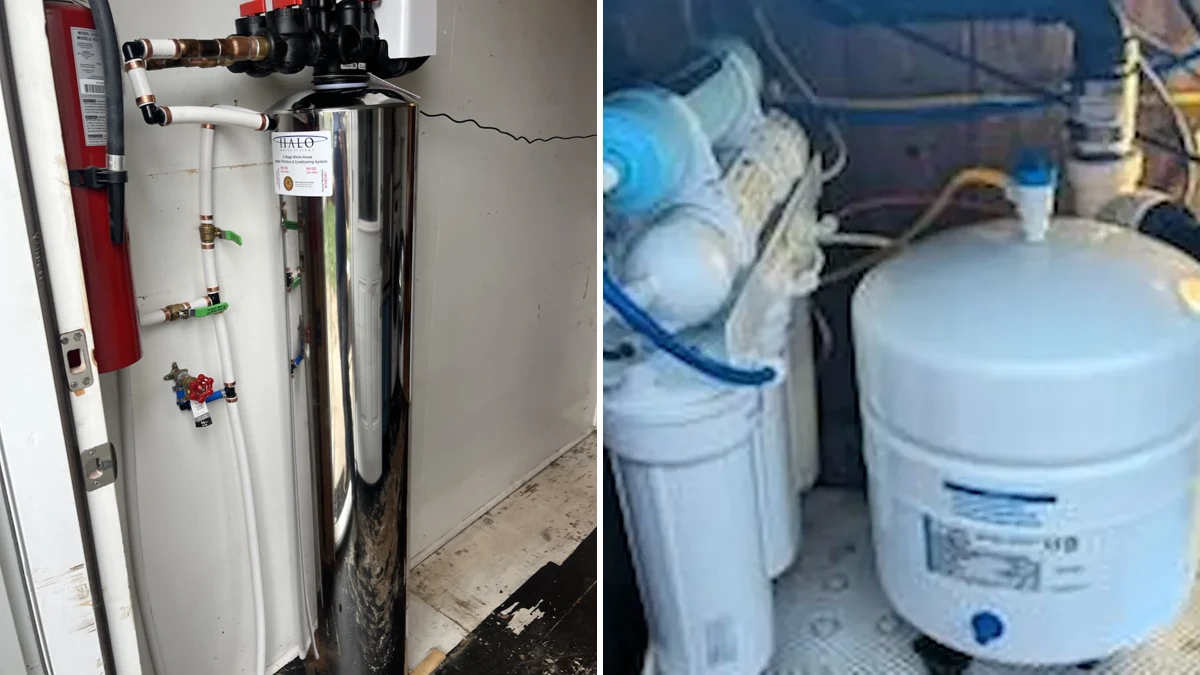
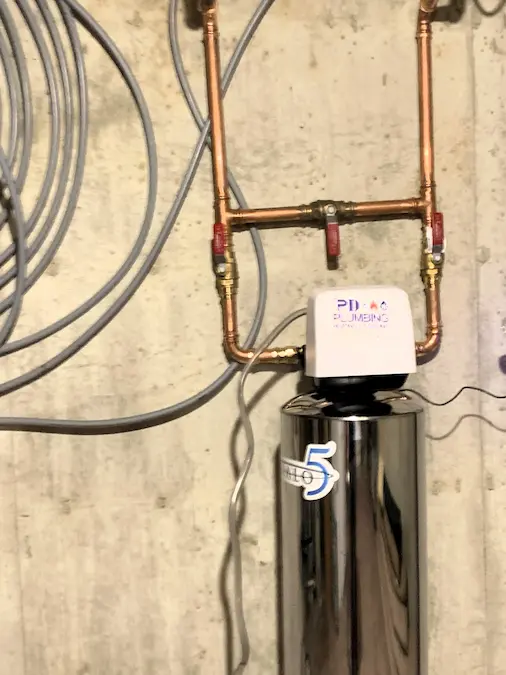
PD Plumbing completed a project with HALO 5 whole-home filtration and a separate under-sink HALO reverse-osmosis system. The HALO 5 serves the home's incoming water, while the RO system provides drinking water at a dedicated kitchen faucet.
Work included the whole-home supply and bypass connections, RO faucet and tank connections, startup flushing and operational checks. The two systems serve different purposes within the same home.
Installation and Maintenance Are Different, Too
Before choosing equipment, consider the cost of installation and the care it will need afterward. There is no reliable universal installed price or filter-change interval for every home.
Whole-home filtration
- Supply-line access, flow capacity and bypass connections matter
- Some systems require cartridge changes; others use serviceable media or automatic backwashing
- HALO 5 uses programmed backwashing; H2Zero models have different care requirements
Under-sink reverse osmosis
- Needs suitable supply, faucet, drain and space under the sink
- Prefilters, postfilters and membranes have model-specific replacement needs
- Performance and water use depend on pressure, design and maintenance
PD Plumbing installs and services whole-home filters and RO systems. We also work on many other brands, depending on the equipment and available parts. See our water filtration and reverse-osmosis service options for the installation and repair side.
Frequently Asked Questions
Does reverse osmosis filter the water in my entire house?
Not when it is installed as a typical under-sink drinking-water system. It treats the dedicated faucet and any correctly connected additional outlet, not showers, laundry or every other household tap.
Does a whole-home water filter do the same job as reverse osmosis?
No. Whole-home filters treat the incoming water for concerns that match their media and certified performance. An under-sink RO membrane treats drinking water at a specific point of use. Neither system should be assumed to reduce every substance.
If I have a HALO 5 or H2Zero system, do I still need RO?
Not necessarily. HALO 5 and H2Zero are whole-home treatment products, not under-sink RO systems. Whether separate RO is useful depends on what you want to address in drinking water and the actual performance of the installed equipment.
Will a whole-home filter or under-sink RO soften my water?
A typical whole-home carbon or sediment filter does not remove hardness like a conventional ion-exchange softener. Under-sink RO can reduce minerals in its treated drinking water, but it does not soften the supply to the rest of the house. A softener and a filter solve different problems.
Can reverse osmosis supply my refrigerator or ice maker?
Some systems can be connected to a refrigerator, subject to the equipment's pressure, capacity, tubing and installation requirements. It is not an automatic feature of every RO installation.
Should I test well water before choosing a treatment system?
Yes. Private-well water can vary from property to property. EPA recommends annual testing for total coliform bacteria, nitrate, total dissolved solids and pH, plus testing for other concerns based on conditions. Treatment should match the results; suspected health risks warrant advice from the appropriate health authority.
Need help with your water treatment?
Water Filtration and RO Service in Wichita
PD Plumbing Heating & Cooling installs, repairs and services whole-home filtration and under-sink drinking-water systems throughout Wichita, Augusta and nearby communities.
Keep Reading
More Water Quality Guides
Keep reading helpful guides from PD Plumbing Heating & Cooling.